
Published August 6, 2026 • 10 min read
- Yes — a cold-climate ductless mini-split heats a Northern Utah home through winter. Modern cold-climate models hold near their full rated capacity down to about 5°F and keep producing heat well below zero, often to −13°F or lower.
- The catch is the model: a cold-climate (hyper-heat) unit is engineered for this. A standard mini-split loses a lot of output by the low teens.
- They're also very efficient — even in cold weather a heat pump moves heat instead of burning fuel, delivering well over one unit of heat per unit of electricity.
- For most homes a properly sized unit can be the sole heat source; in leaky or very large homes, a backup adds a safety margin during rare deep cold snaps.
It's one of the most common questions we hear from Northern Utah homeowners considering ductless: "I get that a mini-split cools great — but is it really going to keep my house warm when it's 15 degrees outside and blowing off the lake?" It's a fair question. For decades the received wisdom was that heat pumps "don't work in the cold," and plenty of people still believe a mini-split gives up somewhere around freezing.
That reputation is out of date. Heat-pump technology has changed dramatically, and today's ductless mini-split systems — the cold-climate versions — are engineered specifically to heat homes in places far colder than Utah. Salmon HVAC has installed and serviced heating and cooling across Davis, Weber, Salt Lake, and Morgan counties since 1979, and we install a growing number of mini-splits that carry homes through the whole winter. Here's the honest picture of how they perform in our climate, and how to make sure yours is set up to keep up.
How a Mini-Split Heats (and Why Cold Used to Be a Problem)
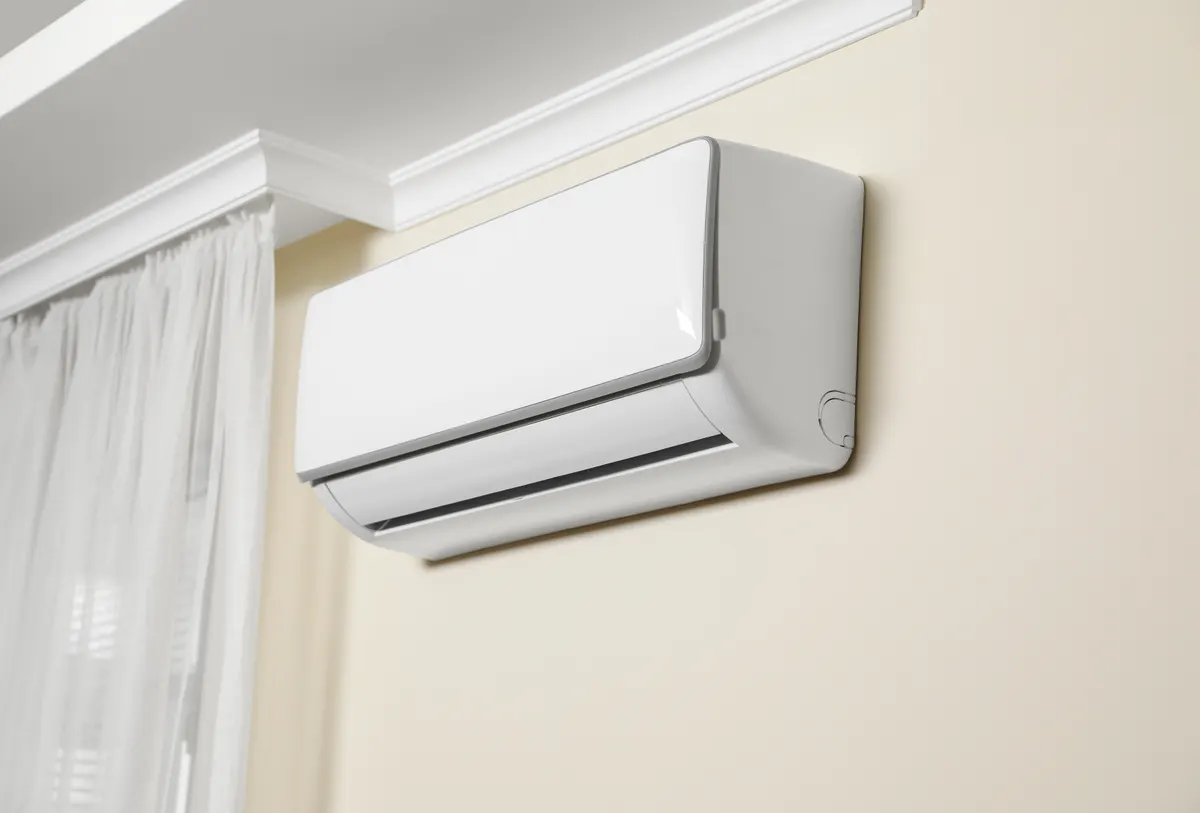
A ductless mini-split is a heat pump. Instead of burning gas the way a furnace does, it uses refrigerant to move heat from one place to another. In summer it pulls heat out of your house and dumps it outside. In winter it runs in reverse — pulling heat energy out of the outdoor air (yes, even cold air holds heat) and delivering it indoors.
That's the part that sounds counterintuitive. There's usable heat in air well below freezing; the trick is extracting it efficiently. Older heat pumps struggled because as the outdoor temperature dropped, their ability to pull heat dropped with it — capacity fell off fast, and by the time it was genuinely cold the unit couldn't keep up. That's the era that gave heat pumps their bad cold-weather reputation.
Modern cold-climate mini-splits solve this with better compressors (variable-speed, "inverter-driven"), improved refrigerants, and enhanced vapor-injection designs that let them keep extracting heat at much lower temperatures. The result is a completely different machine from the heat pumps your neighbors complained about twenty years ago. If you want the deeper background on heat-pump heating in our climate, our guide on whether heat pumps work in Utah's cold winters covers the same physics for whole-home systems.
The Numbers: What "Cold-Climate" Actually Means
This is where the marketing terms turn into real performance. A true cold-climate mini-split isn't a vague label — it's backed by low-temperature data you can check:
- Near-full capacity at 5°F. The best cold-climate models (Mitsubishi's Hyper-Heating, Daikin's cold-climate line, Fujitsu's low-temp series, and others) hold at or near 100% of their rated heating capacity down to around 5°F.
- Useful heat well below zero. Many cold-climate units are rated to keep operating down to roughly −13°F to −15°F, still delivering meaningful heat rather than shutting off.
- Standard units fade early. A conventional (non-cold-climate) mini-split can lose 25–45% of its rated output by the time it hits about 5°F, while a cold-climate model is designed to hold closer to 70% or more at that same temperature.
- Certified efficiency in the cold. ENERGY STAR's cold-climate designation requires a coefficient of performance (COP) of at least 1.75 at 5°F — meaning the unit still delivers 1.75 units of heat for every unit of electricity, even in that cold.
Now put that against a Northern Utah winter. In the Salt Lake, Davis, and Weber valleys, typical winter overnight lows sit in the teens to mid-20s, with cold snaps that occasionally drop into the single digits or briefly below zero during a hard inversion or arctic push. A cold-climate mini-split rated to −13°F covers the overwhelming majority of those nights with capacity to spare. The handful of extreme days per winter are exactly what a backup plan is for — more on that below.
Will It Actually Keep My Utah House Warm? It Comes Down to Sizing
A mini-split's temperature rating tells you what it can do; correct sizing decides whether it keeps your house comfortable. This is the single biggest factor in whether a homeowner is thrilled or disappointed with ductless heating, and it's where professional installation earns its keep.
The heating load of a home depends on its size, insulation, windows, air sealing, and layout. An undersized unit will run flat-out on the coldest nights and still lose ground; an oversized one short-cycles and wastes efficiency. A proper load calculation (a Manual J, in the trade) matches the equipment to the home. A few Utah-specific realities shape that math:
- Insulation and air sealing matter more than the outdoor temperature. A tight, well-insulated Kaysville home is far easier to heat with ductless than a drafty older bungalow, at the same 10°F night.
- One head heats one zone. A single wall unit is ideal for an open floor plan, an addition, a finished basement, or a room addition or ADU. Heating a chopped-up multi-room house evenly usually means a multi-zone system with several heads.
- Altitude and dry air play a role. Our thin, dry winter air affects how any system performs and how comfortable it feels — one reason many homeowners notice how dry a Utah home gets in winter. Sizing and placement account for it.
Done right, a cold-climate mini-split delivers steady, even heat without the on-off blast of a furnace — many people find it more comfortable, not just adequate.
Do You Need Backup Heat in Northern Utah?
Here's the honest answer: often you don't, but sometimes it's the smarter setup. A correctly sized cold-climate mini-split can serve as the sole heat source for many Northern Utah homes and additions. Whether you should add a backup comes down to your home and your tolerance for risk on the two or three worst nights of the year.
| Your situation | Typical recommendation |
|---|---|
| Well-insulated home or addition, single zone | Cold-climate mini-split can stand alone |
| Older or drafty home, marginal insulation | Keep or add a backup for deep cold snaps |
| Replacing a working furnace, want redundancy | Dual setup: mini-split does the daily work, furnace backs it up |
| Large, multi-room house | Multi-zone system, sized with cold-snap margin |
Common backup options include keeping an existing gas furnace as a secondary source, built-in electric-resistance backup, or a supplemental heat source in the coldest room. A "dual-fuel" or hybrid arrangement — heat pump for the bulk of the season, furnace for the extremes — gives you the efficiency of ductless most days and the brute-force capacity of gas on the rare arctic night. If you're weighing that trade-off for your whole home, our breakdown of heat pump vs. AC + furnace costs in Utah is a useful companion.
Efficiency and Operating Cost in Winter
Even when it's cold, a heat pump is remarkably efficient because it moves heat rather than creating it by combustion or resistance. A furnace is, at best, capped near 100% efficient — it can't deliver more energy than the gas it burns. A cold-climate mini-split routinely delivers 150–300% "efficiency" (a COP of 1.5 to 3.0) across most of the heating season, because for every unit of electricity it pulls extra units of free heat from outside.
That ratio does fall as the temperature drops, which is why the COP-at-5°F figure matters. But even on a cold Utah night, a quality mini-split stays far more efficient than electric baseboard or resistance heat, and it's competitive with — often cheaper to run than — gas heat, depending on local electricity and gas rates. For homeowners already thinking about energy costs, ductless heating pairs well with the efficiency habits we cover in our post on cutting winter heating bills.
What About Ice, Defrost, and Snow?
A reasonable worry: what happens to the outdoor unit when it's snowing and frosting up? Two things you should know:
- Defrost is normal and automatic. In cold, damp conditions frost builds on the outdoor coil. The system periodically runs a brief defrost cycle — you may see steam rising off the unit and a short pause in heating. That's the unit working correctly, not a malfunction.
- Placement protects performance. Outdoor units should be mounted on a stand or wall bracket above expected snow depth, with clearance for drainage and airflow, and away from roof-shed and drip lines. In Ogden Valley and other higher-snow areas, that mounting detail matters even more.
Good installation handles all of this. It's one more reason the quality of the install — not just the box on the wall — determines how well a mini-split rides out a Northern Utah winter.
Rebates and Incentives in 2026
A quick, honest update on the money side, because it changed recently. The federal 25C Energy Efficient Home Improvement Credit — which had offered up to $2,000 back for a qualifying heat pump — expired on December 31, 2025 under the 2025 federal tax law and is not available for systems installed in 2026. If you're seeing older articles that still promise that credit, they're out of date.
The good news is that utility rebates in Utah still apply. Programs through Rocky Mountain Power and Dominion Energy have historically offered rebates on qualifying high-efficiency heat pumps and mini-splits, and those local incentives are unaffected by the federal change. Amounts and eligibility shift year to year, so we help homeowners confirm exactly what's available before committing. For the full current picture, see our Utah heat pump rebates & tax credits guide for 2026.
Thinking About Ductless Heating This Winter?
Salmon HVAC will assess your home, size the right cold-climate mini-split, and tell you honestly whether it can stand alone or should pair with a backup — no pressure, just a clear plan for a warmer, more efficient winter.
Is a Mini-Split Right for Your Utah Home?
A ductless mini-split is an especially strong fit when you want to:
- Heat and cool an addition, ADU, garage, or finished basement without extending ductwork.
- Fix a room that's always too cold or too hot — a bonus room over the garage, a sunroom, a converted attic.
- Add efficient zoned comfort to a home with no ducts, or replace aging baseboard or wall heaters.
- Cut energy use with year-round heating and cooling from one efficient system.
If you're primarily comparing whole-home cooling approaches, our guide on mini-split vs. central air vs. window units lays out the trade-offs. And if you want the full cost-and-value overview of ductless in our area, start with our pillar guide to ductless mini-split systems in Utah. When you're ready for a specific recommendation, reach out to our team and we'll walk your space with you.
Frequently Asked Questions
Do ductless mini-splits work in Utah winters?
Yes — a cold-climate ductless mini-split will heat a Northern Utah home through a normal winter. Modern cold-climate models hold close to their full rated heating capacity down to about 5°F and keep producing heat well below zero, often to −13°F or lower. That covers the vast majority of Salt Lake, Davis, Weber, and Morgan county winter days. The key is choosing a cold-climate (hyper-heat) model, not a standard mini-split, and sizing it correctly for the space.
How cold can a mini-split heat pump operate before it stops working?
A standard mini-split loses a lot of output by the time it hits the low teens and single digits. A cold-climate model is built differently: many are rated to operate down to roughly −13°F to −15°F and still deliver useful heat, holding around 70% or more of rated capacity at 5°F. During a rare Northern Utah cold snap that dips below the unit's rated minimum, the system may need help from a backup heat source, but it does not simply shut off at freezing the way many homeowners assume.
Do I need backup heat with a mini-split in Northern Utah?
Not always, but it's often the smart setup. A properly sized cold-climate mini-split can be the sole heat source for many Northern Utah homes. In poorly insulated homes, very large spaces, or for homeowners who want a safety margin during a deep cold snap, pairing the mini-split with a backup — an existing furnace, electric resistance heat, or a second heat source — provides peace of mind. We help homeowners decide based on the home's insulation, size, and layout.
Are mini-splits efficient for heating in cold weather?
They are among the most efficient ways to heat. Even in cold weather, a cold-climate heat pump moves heat rather than burning fuel, so it typically delivers well over one unit of heat for every unit of electricity. ENERGY STAR's cold-climate designation requires a coefficient of performance of at least 1.75 at 5°F — meaning 175% efficiency at that temperature. Efficiency does drop as it gets colder, but a quality unit stays far more efficient than electric baseboard or resistance heating.
Do mini-splits still qualify for tax credits or rebates in 2026?
The federal 25C Energy Efficient Home Improvement Credit, which offered up to $2,000 for a qualifying heat pump, expired December 31, 2025 and is not available for systems installed in 2026. However, Utah utility rebates through providers like Rocky Mountain Power and Dominion Energy can still reduce the cost of a qualifying high-efficiency heat pump or mini-split. Program amounts change, so we help homeowners confirm what's currently available before a project.