Published July 14, 2026 • 9 min read
- Do the safe checks first: thermostat set to cool and below room temp, fresh air filter, outdoor disconnect on, and check the AC breaker once. These solve a real share of "AC not working in heat" calls.
- Protect people first, then the equipment. Close blinds, run fans, hydrate, and move vulnerable family members and pets somewhere cooler while you troubleshoot.
- Stop and call if the outdoor unit hums but the fan won't spin, the breaker trips twice, you smell burning, or the indoor coil is iced over.
- Salmon HVAC offers 24/7 emergency AC repair across Davis, Weber, Salt Lake, and Morgan counties. Call (801) 397-0030.
It's 4:00 p.m., the thermometer on your patio reads 101°F, and the house is getting warmer by the minute. The thermostat says "cooling," but the vents are blowing room-temperature air. Your air conditioner has picked the worst possible moment to quit.
This is one of the most common calls we get all summer across Centerville, Bountiful, Layton, Ogden, and Salt Lake City. The good news is that a no-cooling emergency is not always a catastrophe. Some causes are things you can safely check yourself in a few minutes. Others need a technician — but even then, many are ordinary repairs, not a reason to panic about replacing the whole system. This guide walks you through exactly what to do, in order, when your AC quits in the heat.
Step 1: Keep Your Household Safe First
Before you troubleshoot a single component, take care of the people and pets in the house. A Utah heat wave can push indoor temperatures into the 90s within a few hours once the AC stops, especially in the late-afternoon peak. Heat is hardest on the people least able to tell you they're struggling.
Take these steps right away:
- Hydrate. Drink water and encourage everyone in the home to do the same, even if they don't feel thirsty.
- Block the sun. Close blinds and curtains on the south- and west-facing windows to stop solar heat gain.
- Move air. Box fans and ceiling fans don't cool the air, but moving air helps your body shed heat and feel several degrees cooler.
- Check on the vulnerable. Infants, older adults, pregnant residents, anyone with heart or respiratory conditions, and pets are most at risk. If the home is heating up fast, get them to a cooler location — a neighbor's house, a mall, a library, or a cooling center.
- Know the warning signs. Dizziness, nausea, a rapid pulse, headache, confusion, or hot, dry skin can signal heat exhaustion or heat stroke. If you see them, cool the person down and seek medical help — heat stroke is a medical emergency, not an HVAC one.
Once people are safe and comfortable, you can move on to figuring out why the AC stopped.
Step 2: Run the Safe DIY Checks
A surprising number of "my AC died" calls come down to something simple. None of the checks below require opening electrical panels or touching refrigerant, and all of them are safe for a homeowner to do.
Check the thermostat
Make sure it's set to Cool (not "fan" or "off") and that the target temperature is set several degrees below the current room temperature. If it's a smart or programmable thermostat, confirm a schedule or "eco" setting hasn't quietly raised the setpoint. If the display is blank, replace the batteries — a dead thermostat can't call for cooling.
Replace a clogged air filter
A filter caked with dust and cottonwood is one of the top causes of summer AC failure in Utah. It chokes airflow, which can freeze the indoor coil and shut cooling down. Pull the filter. If you can't see light through it, replace it. We cover this in detail in our Utah air filter replacement guide.
Confirm the outdoor disconnect and breaker
There's usually a disconnect box on the exterior wall near the outdoor unit — make sure it's fully seated and switched on. Then check your electrical panel for a tripped AC breaker. Reset it once. If it trips again, stop and call a technician; a breaker that keeps tripping is protecting you from a real electrical fault.
Look (and listen) at the outdoor unit
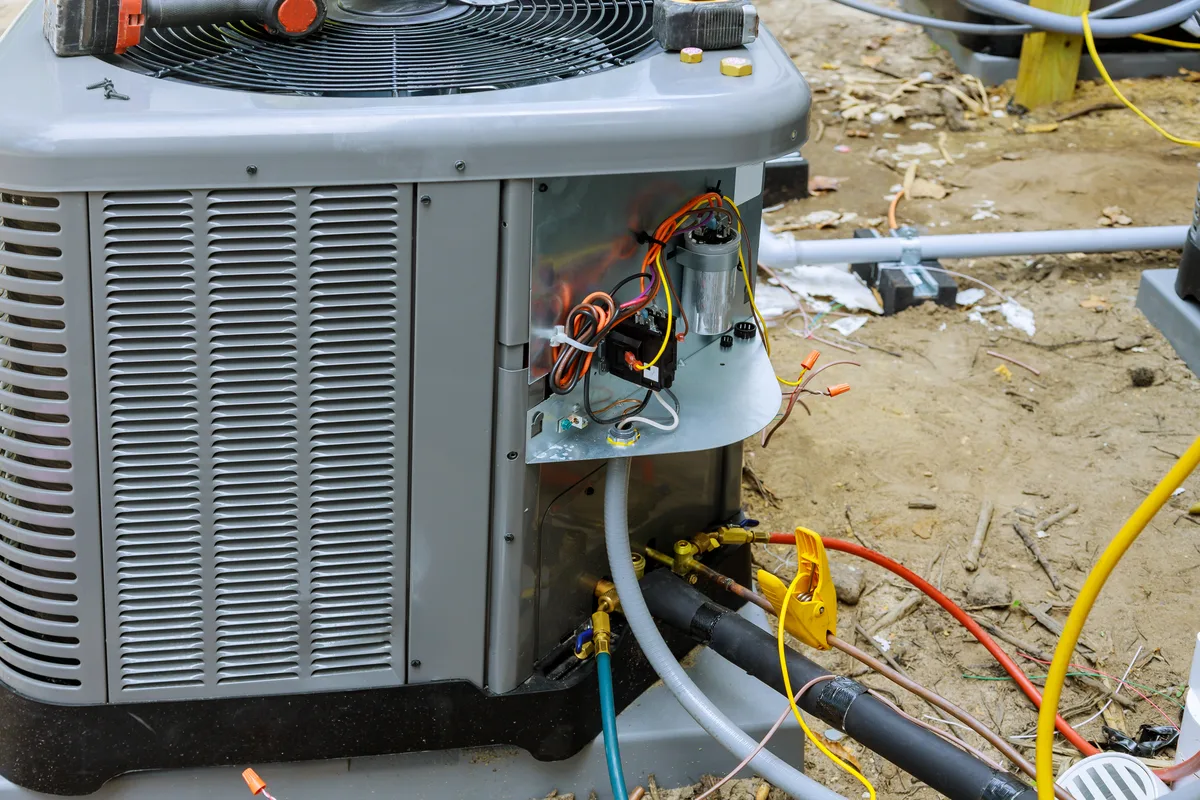
Walk out to the condenser. Is the big fan on top spinning? Clear any weeds, leaves, or cottonwood packed against the cabinet while the system is off. If the unit is humming but the fan is not turning, shut the system off at the thermostat and call for service — running it that way can damage the compressor. That specific symptom usually points to a failed capacitor or fan motor, which we break down in our outdoor AC fan not spinning guide.
Check for a frozen coil
If the copper refrigerant line at the outdoor unit is coated in frost, or you see ice on the indoor unit, your system has frozen up — often from a dirty filter, blocked vents, or low refrigerant. Turn the cooling off and set the fan to On to help it thaw, which can take a few hours. Don't chip at the ice. Once thawed, if it freezes again, it needs a technician.
If none of these gets cool air moving again — or you hit one of the "stop and call" symptoms — it's time for a professional. For a broader rundown of causes, our guides on why your AC isn't cooling and the top causes and fixes for Utah homes go deeper.
Step 3: Decide Whether It's a True Emergency
Not every broken AC is a 2:00 a.m. call-out. For most healthy adults, a warm house for an evening is uncomfortable but manageable. Knowing where your situation falls helps you decide between waiting for a next-day appointment and calling for emergency HVAC service right now.
| Call for emergency service when… | A same-day or next-day visit is usually fine when… |
|---|---|
| Infants, older adults, or people with medical conditions are in the home and it's heating up fast | Healthy adults who can stay hydrated and use fans |
| Indoor temperature is climbing into the 90s and won't stabilize | The house is warm but holding in the low-to-mid 80s |
| You smell burning, see smoke, or the breaker keeps tripping | The unit simply isn't cooling, with no burning smell or electrical issue |
| A pet is showing signs of heat distress | You can relocate to a cooler space for the evening |
When in doubt, call. Salmon HVAC can talk you through the symptom on the phone and help you decide whether it needs immediate attention. Ignoring a struggling system also carries a cost — we cover that in the real cost of postponing AC repairs in Utah's summer heat.
Why Air Conditioners Fail During Utah Heat Waves
It's not a coincidence that so many systems die on the hottest afternoons. A heat wave is a stress test. On a mild June day, your AC might cycle on and off comfortably. When it's 100°F, it runs for hours at maximum load, and every marginal component is pushed to its limit at exactly the same time.
The most common heat-wave failures we see in Northern Utah:
- Failed capacitors. The small cylinder that gives the motor its starting torque is the number-one heat-wave casualty. Utah heat and repeated hard starts wear them out.
- Burned or pitted contactors. The electrical switch that powers the outdoor unit takes a beating during long run times.
- Dirty condenser coils. Coils packed with dust and cottonwood can't reject heat, so the system overheats and shuts down on a safety.
- Low refrigerant. A slow leak that went unnoticed in spring shows up as weak cooling when demand peaks.
- Frozen indoor coils. Restricted airflow from a dirty filter or low refrigerant ices the coil and stops cooling entirely.
- Aging fan motors and compressors. Older parts that were hanging on all spring finally give out under full-load heat.
Utah's climate makes this worse than average. Our dry air, high altitude, intense summer sun, and clouds of springtime cottonwood are all hard on outdoor equipment. That's also why the systems that sail through a heat wave are almost always the ones that got a spring tune-up — testing capacitor strength, cleaning coils, and checking refrigerant before the first 100°F day catches most of these failures early.
What a Salmon HVAC Emergency Visit Looks Like
When you call us for a no-cooling emergency, here's what to expect:
- We triage on the phone. We'll ask what the system is doing — humming, silent, blowing warm, tripping the breaker — and whether anyone in the home is at risk from the heat.
- We diagnose before we replace anything. Our technician tests capacitors, contactors, voltage, motor amperage, coil condition, and refrigerant performance to find the actual failure.
- We quote before we fix. You get an upfront repair price. No work starts until you approve it.
- We fix it first when we can. Our trucks carry common parts like capacitors and contactors, so many calls are repaired on the first visit. Replacement only enters the conversation when repair genuinely doesn't make sense.
- We verify. After the repair we confirm the fan, compressor, airflow, and temperature split are all behaving before we leave.
Typical Emergency AC Repair Costs in Utah
Every repair depends on the real diagnosis, but these are realistic ranges for the failures behind most heat-wave no-cooling calls in Northern Utah:
| Repair type | Typical cost range |
|---|---|
| Capacitor replacement | $150-$300 |
| Contactor replacement | $150-$300 |
| Condenser coil cleaning | $150-$300 |
| Refrigerant leak diagnosis & recharge | $300-$800+ |
| Outdoor fan motor replacement | $350-$650 |
| Compressor diagnosis or replacement | Often $900+ if replacement is needed |
After-hours and emergency visits may carry an additional service fee, which we'll always tell you about upfront. If your system is older and the repair is heading toward a large number, we'll walk you through the repair-versus-replace math honestly — see our guides on how long an AC unit lasts in Utah and 2026 HVAC replacement costs.
How to Avoid the Next Heat-Wave Breakdown
The best emergency is the one that never happens. A few habits keep your AC ready for the hardest days of summer:
- Schedule a spring tune-up every year, ideally before Memorial Day. This is where weak capacitors and dirty coils get caught before they fail.
- Change your filter every 1-3 months during cooling season — more often if you have pets or run the system hard.
- Keep the outdoor unit clear. Trim plants back a couple of feet and hose off cottonwood and dust when you see it building up (with the power off).
- Don't ignore early warning signs. Weak airflow, warm air, odd noises, or higher bills are your system telling you it's struggling. Address them in the mild weather, not during the heat wave.
- Know your system's age. If it's pushing 12-15 years and needing repairs, plan a replacement on your terms instead of during an emergency.
Salmon HVAC has been keeping Northern Utah families cool since 1979. Whether you need a same-day repair, a maintenance plan, or an honest opinion on repair versus replacement, we're here — and we'll always try to fix what you have first.
AC Out in the Heat? We're On Call 24/7.
If your air conditioner has quit during a Utah heat wave, Salmon HVAC will diagnose the failure, quote the fix, and get your home cool again — repair-first, whenever repair is the right call.
Frequently Asked Questions
My AC stopped working in the heat — what should I do first?
Check that the thermostat is set to cool and below room temperature, replace a clogged air filter, confirm the outdoor disconnect is on, and check the AC breaker once. If the outdoor unit hums but the fan won't spin, or the breaker trips again, shut the system off and call for service. While you wait, close blinds, run fans, and hydrate to stay safe in the heat.
Is a broken AC an emergency in a Utah heat wave?
It can be. For most healthy adults a warm house is uncomfortable but not dangerous for a short time. It becomes an emergency when the home has infants, older adults, pregnant residents, people with heart or respiratory conditions, or pets — or when indoor temperatures climb into the 90s. In those cases, get to a cooler location and call for same-day or emergency AC repair.
Why do air conditioners fail during the hottest days?
Heat waves push an AC to run for hours at maximum load. That stress is exactly when weak capacitors, worn contactors, dirty condenser coils, low refrigerant, and aging fan motors give out. A part that was marginal in spring often fails on the first 100°F afternoon.
How fast can Salmon HVAC come out during a heat wave?
Salmon HVAC serves Davis, Weber, Salt Lake, and Morgan counties and offers 24/7 emergency HVAC service. Response times during peak heat depend on call volume, but our trucks carry common repair parts like capacitors and contactors, so many no-cooling calls can be fixed on the first visit. Call (801) 397-0030.
Should I keep resetting the breaker if my AC keeps tripping it?
No. Check and reset the AC breaker one time only. If it trips again, leave it off and call a technician. A breaker that keeps tripping is protecting you from a shorted motor, failing compressor, or wiring fault, and repeated resets can create a fire risk or cause more damage.