Most Northern Utah homeowners don't give their air conditioner a second thought until the first hot weekend of May — when it either doesn't turn on or runs all day without bringing the house below 80°F. At that point, the question becomes unavoidable: is this worth fixing, or is it time to replace the whole system?
After 47 years servicing AC systems from Centerville to Salt Lake City to Morgan County, we've had this conversation with thousands of homeowners. The answer depends on the age and condition of your system, the nature of the repair, and some factors specific to Utah's climate that change the math compared to national averages. This guide walks through all of it.
How Long Does a Central AC Unit Last? Utah Reality vs. National Average
The commonly cited national average for central air conditioner lifespan is 15–20 years. In Northern Utah, expect 12–16 years — and less if the system hasn't received consistent annual maintenance.
This isn't because Utah HVAC contractors do inferior work. It's because Utah's environment is genuinely harder on mechanical equipment than most of the country. A well-maintained unit in a Pacific Northwest home running through mild summers in moderate humidity will outlast the same unit installed in a Salt Lake Valley home running at full capacity through a 106°F July and then sitting through an inversion-heavy winter.
This matters because the repair-vs-replace decision depends heavily on where a system sits within its useful life. A 10-year-old system in Utah isn't necessarily at the midpoint — it may already be at 65–75% of its expected life. Treating it like a 10-year-old system in a more forgiving climate is a mistake that leads to over-investing in a system with limited runway left.
What Utah's Climate Does to Your Air Conditioner
Four specific environmental factors accelerate equipment aging in Northern Utah:
UV Radiation at Elevation. Salt Lake City sits at roughly 4,300 feet above sea level. At that elevation, UV intensity is approximately 17% higher than at sea level — and Ogden Valley, Morgan, and the Wasatch Back communities are even higher. UV radiation gradually degrades plastic components on your outdoor condenser unit, breaks down wire insulation, and weakens capacitor housings over years. This is slow, invisible damage until something fails.
Extreme Temperature Swings. Northern Utah regularly sees 40–50°F differences between daytime highs and overnight lows in summer. A system running hard through a 108°F afternoon and then cycling off into a 60°F night is under constant thermal stress. Repeated expansion and contraction strains copper refrigerant lines, brazed connections, and the compressor itself — every season, year after year.
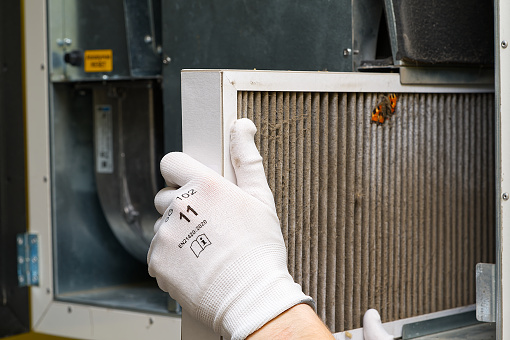
Dry Air and Dust Loading. Utah's low relative humidity means more airborne particulates, and the I-15 corridor between Ogden and Salt Lake has heavy dust loading from dry soil, construction activity, and seasonal winds. A fouled evaporator coil can reduce airflow by 30–40%, forcing the compressor to run hotter and harder. Compressor overheating is the leading cause of premature failure — and most of it is preventable with annual AC maintenance.
Inversion Season Exposure. During Utah's winter and early spring inversions, fine particulate matter concentrations in the valleys spike well above EPA air quality thresholds. Systems that operate during inversion events are repeatedly pulling contaminated air across their coils. This accelerates coil fouling and filter loading at a rate faster than systems in cleaner-air markets.
Warning Signs Your AC Is Past the Tipping Point
These signs — especially in combination on a system 10 or more years old — indicate that replacement is likely the better investment:
Refrigerant leaks requiring repeated recharges. R-22 (the older "Freon" refrigerant) is no longer manufactured or imported in the United States — production was banned as of 2020. What's left on the market is recovered and reclaimed, and it runs $80–$150 per pound or more. If your system uses R-22 and has needed refrigerant added more than once, you're continually spending money on a scarce consumable to keep an aging system running.
Compressor failure. The compressor is the most expensive single component in your AC system — replacement typically runs $1,200–$2,500 in parts and labor, or 40–60% of a full system replacement cost. When a compressor fails on a system 10 or more years old, most experienced technicians recommend replacement. You're investing most of the money for a rebuilt heart in an aging body.
Multiple component failures in a single season. One capacitor replacement is routine maintenance. A capacitor, a contactor, a refrigerant recharge, and a blower motor in the same summer is the system telling you it's failing systematically — not just having bad luck.
Rising utility bills without explanation. Aging systems lose efficiency as components wear, coils foul, and refrigerant charge drifts. If your summer cooling costs have increased noticeably over two to three years without changes in usage habits, efficiency loss is likely contributing.
Short cycling. If your system starts, runs for two or three minutes, and then shuts off repeatedly, something fundamental is wrong — often a refrigerant charge problem, an oversized system, or a struggling compressor. Short cycling causes disproportionate wear on the compressor because most motor damage occurs at startup.
The Repair-vs-Replace Formula: The $5,000 Rule
The standard industry rule of thumb is called the $5,000 Rule: multiply the age of your system (in years) by the estimated repair cost (in dollars). If the result exceeds $5,000, replacement is generally the better financial choice. Under $5,000, repair typically makes sense.
- 12-year-old system, $450 repair: 12 × $450 = $5,400 → lean toward replacement
- 8-year-old system, $450 repair: 8 × $450 = $3,600 → repair makes sense
- 15-year-old system, $200 repair: 15 × $200 = $3,000 → repair is okay, but budget for replacement soon
The $5,000 Rule is a starting point, not a verdict. We also weigh these additional factors when advising homeowners:
Refrigerant type. An R-22 system adds an ongoing cost penalty that the $5,000 Rule doesn't capture. Each future recharge becomes more expensive as reclaimed R-22 supplies tighten.
Efficiency gains from replacement. ENERGY STAR-certified central AC systems today operate at SEER2 ratings of 16 or higher — a substantial efficiency improvement over units from 2010 that might be rated at 10 SEER. For a Northern Utah home spending $200/month on summer cooling, that efficiency gap represents $600–$800 in annual savings that compounds every year you own the new system.
Rocky Mountain Power Wattsmart rebates. Rocky Mountain Power's Wattsmart Homes program offers rebates on qualifying central AC replacements for residential customers. This can meaningfully offset the upfront replacement cost in a way that pure repair math doesn't account for. We've written a more detailed breakdown in our Utah heat pump and AC rebates guide.
When Repair Is the Right Call
Repair makes sense when your system is under 10 years old, uses current R-410A refrigerant, has been maintained regularly, and the repair passes the $5,000 Rule test. Capacitors, contactors, thermostats, and run capacitors are all routine replacements that extend system life at low cost. Our AC repair service handles these same-day across Northern Utah with upfront repair pricing before work begins.
The most cost-effective thing you can do to push your current system's useful life as far as possible is consistent annual maintenance. A spring AC tune-up — coil cleaning, refrigerant check, electrical inspection, capacitor testing, and filter replacement — costs far less than a single emergency repair and consistently adds years to system life.
When Replacement Is the Right Call
Replacement makes sense when your system is 12 or more years old, uses R-22 refrigerant, has had multiple repairs recently, has a failed or failing compressor, or when the $5,000 Rule math clearly points toward it. If you're planning to stay in your home for five or more years, the efficiency gains from a new system — combined with available utility rebates — typically make replacement the better financial decision over a multi-year horizon.
Our AC installation service includes a Manual J load calculation to properly size your new system. Oversized systems short-cycle; undersized systems run continuously. Both outcomes shorten compressor life and reduce comfort. Proper sizing from the start is the single most important thing you can do to maximize the lifespan of a new system in Utah's demanding climate.
If you're not sure whether repair or replacement is the right path, a professional HVAC diagnostic is the right starting point. We'll give you an honest assessment of what we find and what we'd recommend — not a default pitch for the highest-ticket option.
Frequently Asked Questions
How long does a central AC unit last in Utah?
In Utah, central air conditioning units typically last 12–16 years with proper annual maintenance. This is shorter than the national average of 15–20 years because of Utah-specific environmental factors: elevated UV radiation, extreme temperature swings, dry air, and heavy dust loading from inversions and dry soil. Systems that have been skipped on maintenance, or that were undersized at installation, often show significant decline by year 10.
What is the $5,000 Rule for deciding whether to repair or replace an AC unit?
The $5,000 Rule is a standard industry heuristic: multiply your system's age (years) by the repair cost (dollars). If the result exceeds $5,000, replacement is generally the better financial choice. For example, a 12-year-old system needing a $450 repair scores 12 × $450 = $5,400, pointing toward replacement. An 8-year-old system with the same repair scores 8 × $450 = $3,600, pointing toward repair. Factor in refrigerant type and available rebates to refine the decision further.
Should I repair or replace my AC unit if it's 12 years old?
A 12-year-old AC in Utah is in the decision zone. Apply the $5,000 Rule to any repair estimate. Minor component repairs (capacitor, contactor) may still make sense. Compressor failure or significant refrigerant work on a 12-year-old system almost always favors replacement. If the system uses R-22 refrigerant or has needed multiple repairs recently, the case for replacement is stronger. Rocky Mountain Power Wattsmart rebates of up to $2,000 for qualifying replacements also shift the cost comparison.
My AC uses R-22 refrigerant. Should I replace it?
R-22 (Freon) has not been manufactured or imported in the U.S. since January 2020. Only recovered and reclaimed R-22 is available, typically at $80–$150 per pound or more. If your R-22 system has needed refrigerant added more than once, or is 12 or more years old, replacement is almost always the better financial decision. The ongoing refrigerant costs alone justify it, and modern R-410A systems are dramatically more efficient.
What SEER rating should I look for in a new AC unit in Utah?
Look for ENERGY STAR-certified equipment, which exceeds the federal minimum efficiency standards and qualifies for utility rebates. Premium systems from manufacturers like Daikin reach SEER2 ratings of 18 or higher. For a Northern Utah home spending $200/month on summer cooling, upgrading from a 10 SEER unit to an 18 SEER replacement can reduce cooling costs by 35–40% — roughly $700–$800 per cooling season. That payback accelerates the return on a replacement investment.
Does Rocky Mountain Power offer rebates for AC replacement in Utah?
Yes. Rocky Mountain Power's Wattsmart Homes program offers rebates for qualifying central AC replacements for residential customers. Equipment must meet efficiency requirements, be installed in an existing home, and rebate applications must be submitted within 90 days of installation. Salmon HVAC handles the documentation to make sure your application goes through cleanly. Visit rockymountainpower.net for current rebate amounts.
What are the signs an AC unit needs to be replaced rather than repaired?
Key replacement indicators: the system is 12 or more years old and needs a major repair; it uses R-22 refrigerant and has needed recharging more than once; the compressor has failed; there have been multiple component failures in a single season; utility bills have increased steadily without explanation; or the system short-cycles frequently. When two or more of these apply together, replacement is almost always the better long-term financial decision.
Ready for a Straight Answer?
The repair-vs-replace decision is worth making with a real assessment, not a guess. Salmon HVAC serves homeowners throughout Davis, Weber, Salt Lake, and Morgan counties — and we've been navigating exactly these decisions since 1979.
Give us a call at (801) 397-0030 or request a free estimate online. We'll tell you honestly what we find and what we'd recommend — including when the right answer is a repair rather than a replacement.