
Published April 14, 2026 • 7 min read
Key Takeaways
- Schedule a spring AC tune-up in April or early May — before northern Utah's first 90°F days arrive in late May.
- A professional tune-up covers 20+ inspection points that homeowners cannot safely check themselves, including refrigerant charge, capacitor testing, and coil cleaning.
- There are several things homeowners can do right now: replace the air filter, clear debris from around the outdoor unit, and run a thermostat test in cool mode.
- The most common problems we find in spring are dirty evaporator coils, weak capacitors, and low refrigerant — all cheap to fix in April, expensive to deal with on a 100°F day in July.
- Skipping annual maintenance shortens system life by 2–5 years and raises monthly energy bills by 10–15%.
Every spring in northern Utah, we take calls from homeowners who turned on their AC for the first time on a warm May afternoon — and discovered it is not cooling the house. The system sat idle for six months. Something wore out, leaked, or got clogged over winter, and nobody knew until the first hot day of the year.
A spring AC tune-up exists specifically to prevent that scenario. It is a pre-season inspection and service visit that catches problems while the weather is mild, parts are in stock, and our schedule is not packed with emergency calls from people who skipped it. For most northern Utah homes, spring is the single most important maintenance window of the year.
This guide covers what a professional spring tune-up actually includes, what you should do yourself before the technician arrives, and what we see most often on spring service calls after a Utah winter.
Why Spring Is the Right Time for AC Maintenance in Northern Utah
Timing matters. Northern Utah's climate runs two distinct seasons hard on HVAC equipment: winter puts sustained demand on heating systems, and summer puts sustained demand on cooling. Spring is the natural gap between these demand periods — the only time of year when neither system is under load, making it the ideal window for a thorough inspection.
There is also a practical urgency unique to Utah's climate. Temperatures on the Wasatch Front and in the Salt Lake Valley can jump from the 50s to the low 90s within a few weeks in late May. Davis County and Weber County homeowners who wait until June to schedule a tune-up often find two things: their appointment is weeks out because every other homeowner waited too long, and if their system fails, they are waiting for emergency service in the heat.
The Department of Energy estimates that proper HVAC maintenance delivers 5–15% in annual energy savings compared to a neglected system. In practical terms, that is $100–$300 per year for a typical northern Utah home running central AC through June, July, and August — three months of sustained operation in temperatures that routinely reach 95°F–105°F across Davis, Weber, and Salt Lake counties.
What a Professional Spring AC Tune-Up Includes
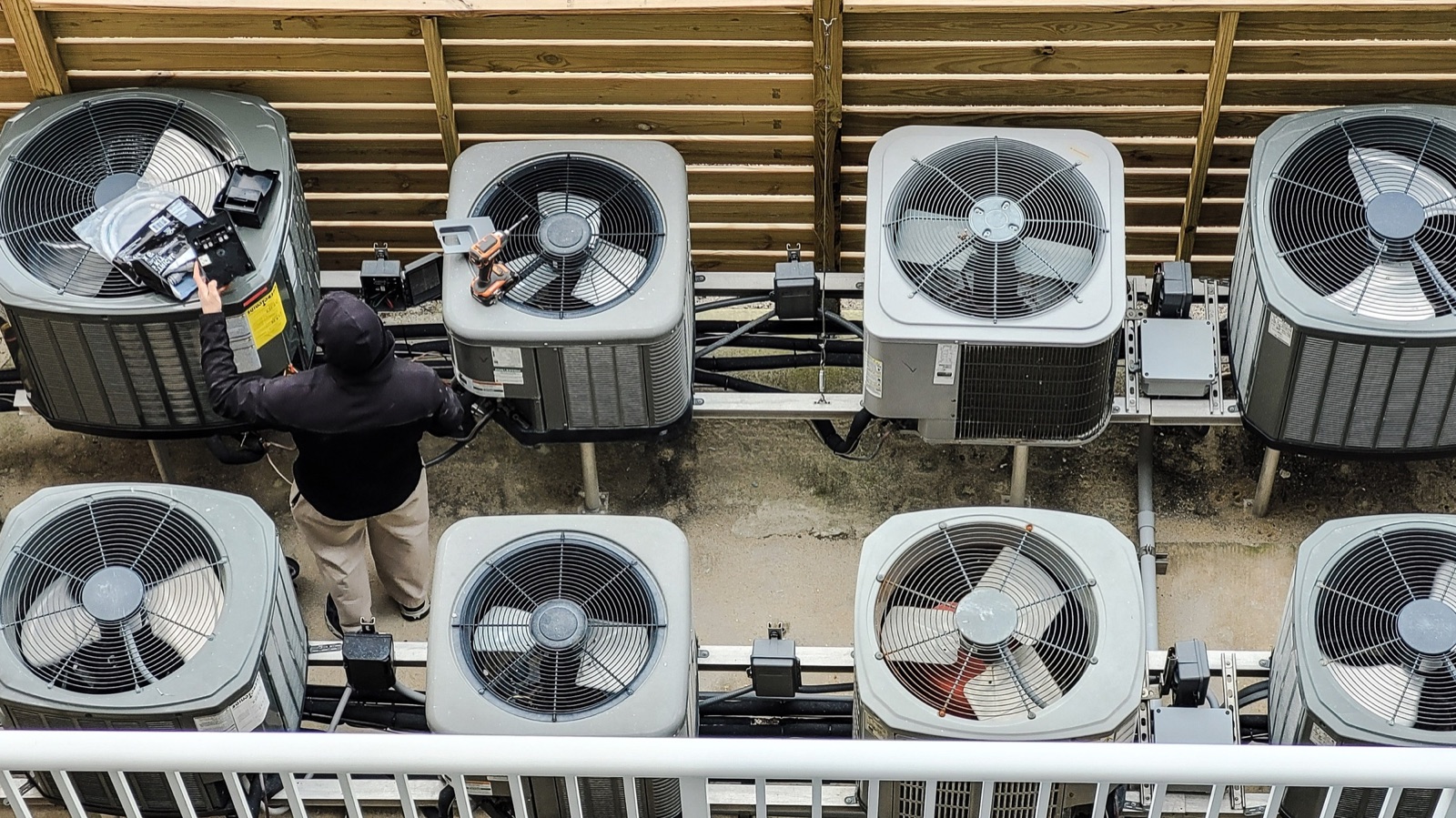
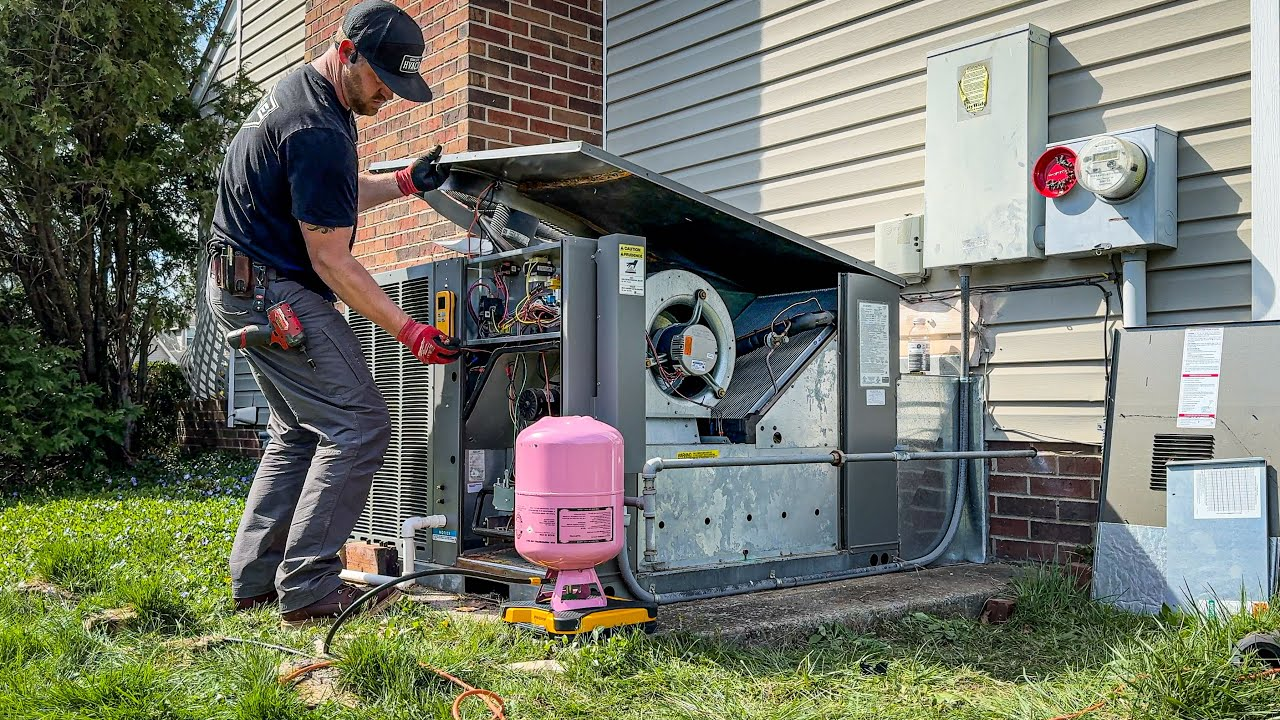
A legitimate spring AC tune-up is not a quick visual walk-around. A thorough service visit from a licensed technician covers 20–25 inspection and service points across the outdoor condenser unit, the indoor air handler, the refrigerant circuit, the electrical system, and the control system. Here is what that looks like in practice:
Professional Spring AC Tune-Up Checklist
What a Salmon HVAC technician checks and services on a spring maintenance visit:
Refrigerant System
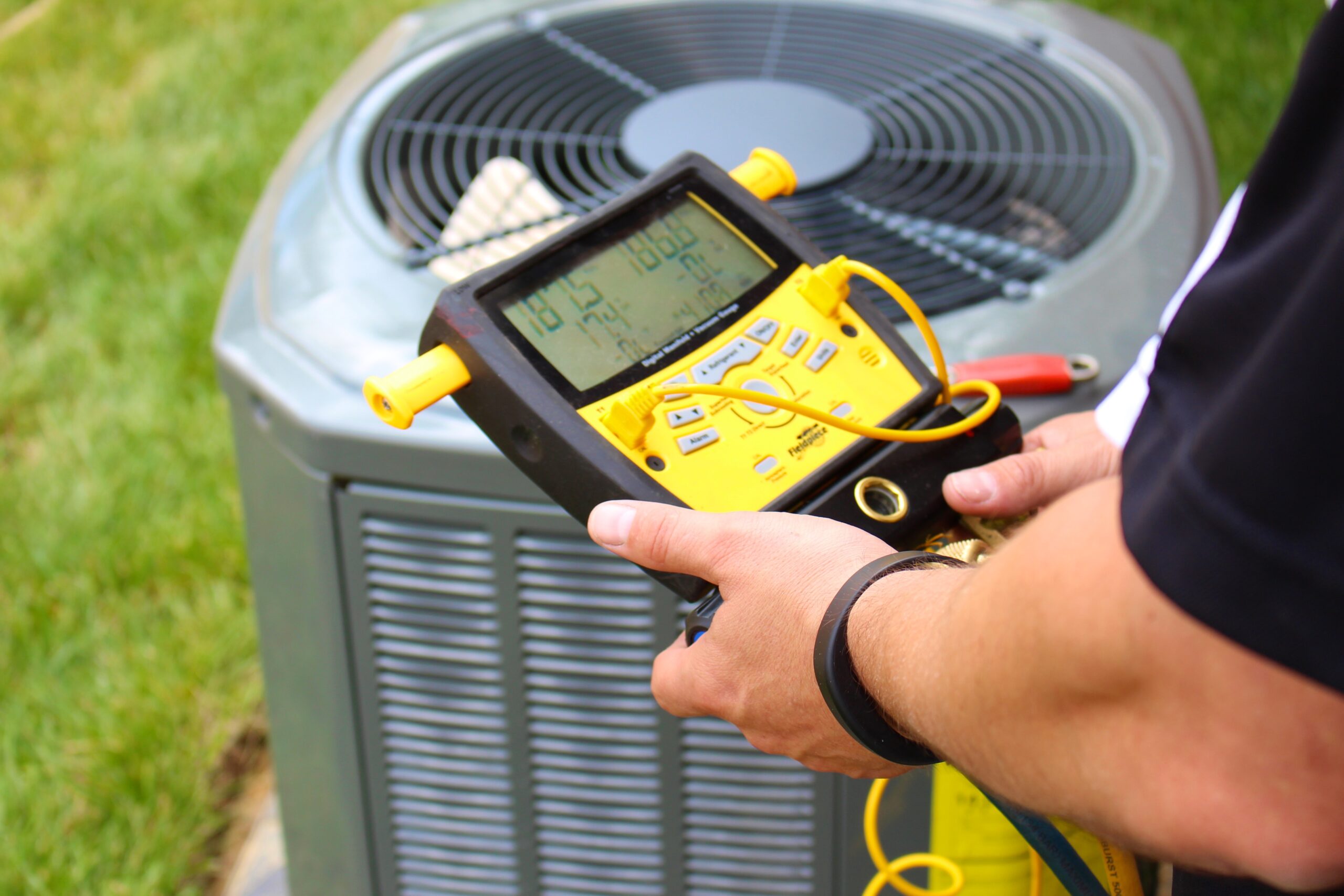
- Check refrigerant charge with manifold gauges — low refrigerant is the leading cause of compressor failure
- Inspect refrigerant lines for signs of leaks or oil staining at fittings
- Verify suction and discharge pressures against manufacturer specs for current outdoor temperature
Electrical Components
- Test start and run capacitors with a capacitance meter — capacitors are the most common single-point failure in Utah AC units
- Inspect and tighten all electrical connections at the contactor, disconnect, and air handler
- Check contactor contacts for pitting or burning
- Measure amperage draw on the compressor and condenser fan motor against nameplate ratings
Coils and Airflow
- Inspect evaporator coil for dirt accumulation and signs of microbial growth
- Clean condenser coil fins with coil cleaner and low-pressure rinse
- Straighten bent condenser fins with a fin comb where needed
- Check evaporator coil for frost patterns that indicate airflow restriction or low refrigerant
Air Handler and Ductwork
- Inspect blower wheel for debris accumulation that reduces airflow and raises static pressure
- Measure static pressure across the air handler to verify within design range
- Check condensate drain pan and drain line — flush and treat with condensate tabs to prevent algae blockage
- Inspect cabinet for air leaks around the filter frame and access panel
Controls and System Test
- Test thermostat operation in cooling mode and verify calibration
- Run a full system startup cycle and verify temperature differential across the evaporator coil (typically 16°F–22°F for a properly charged system)
- Check all supply and return registers for appropriate airflow
A tune-up that skips the refrigerant check or the capacitor test is not a full tune-up — it is a visual inspection. When evaluating service providers, ask specifically what instruments they use and whether they check refrigerant pressures on every visit.
What You Can Do Yourself Before the Tech Arrives
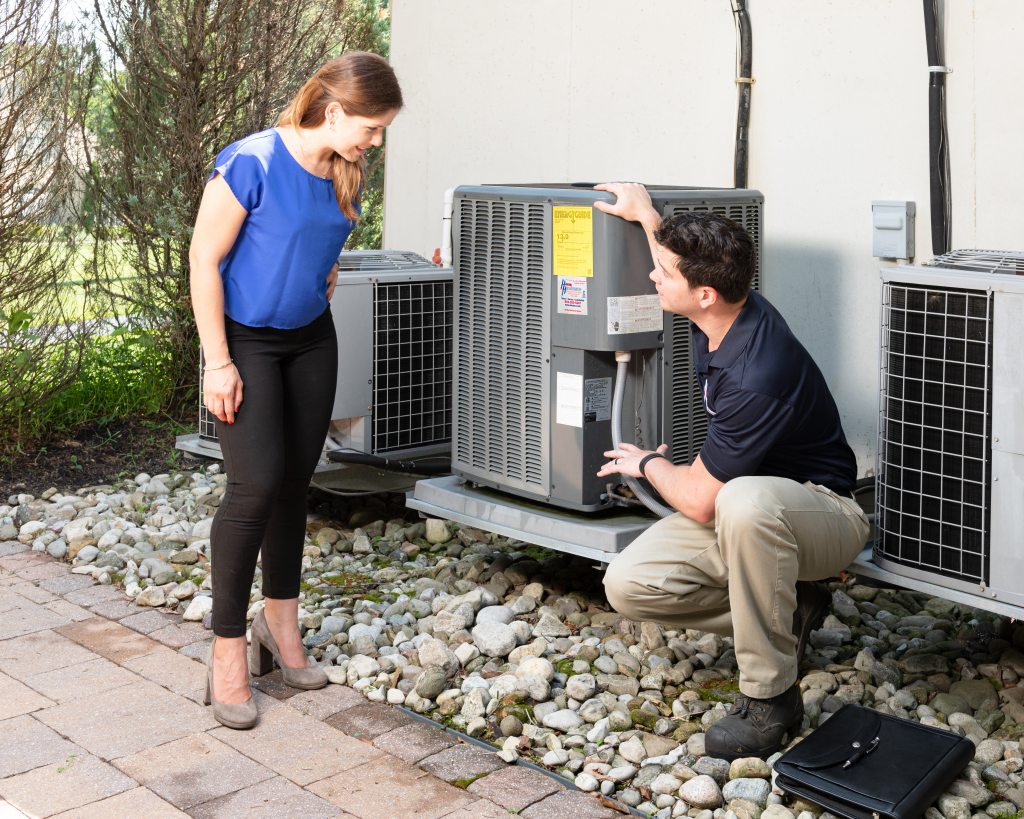
Several spring maintenance tasks are safe, easy, and genuinely useful for homeowners to handle before a professional visit. Doing these ahead of time makes the technician's job more efficient and sometimes reveals obvious issues you can flag immediately.
Replace or Check the Air Filter
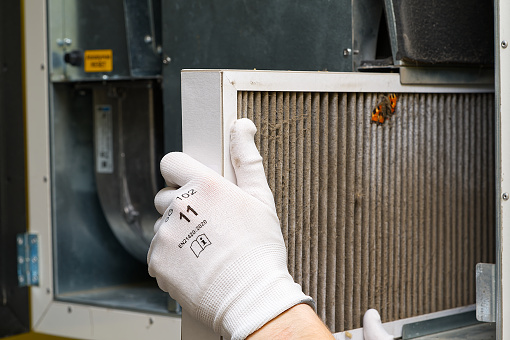
If you have not changed the air filter since last fall, do it now. A clogged filter restricts airflow across the evaporator coil, causing the coil to ice over and the system to work harder for less cooling output. For most northern Utah homes with standard 1-inch filters, replace every 30–60 days during AC season. Homes with pets or in dusty areas — anywhere near unpaved roads in Davis or Weber County — should check filters every 30 days.
Clear the Outdoor Condenser Unit
Walk out to your outdoor unit and remove any debris that accumulated over winter: dead leaves, cottonwood seeds, dirt, weeds growing up through the base. The condenser needs at least 18–24 inches of clear space on all sides for adequate airflow. If bushes or plantings have grown in over the past year, trim them back before your service visit.
Gently Rinse the Condenser Fins
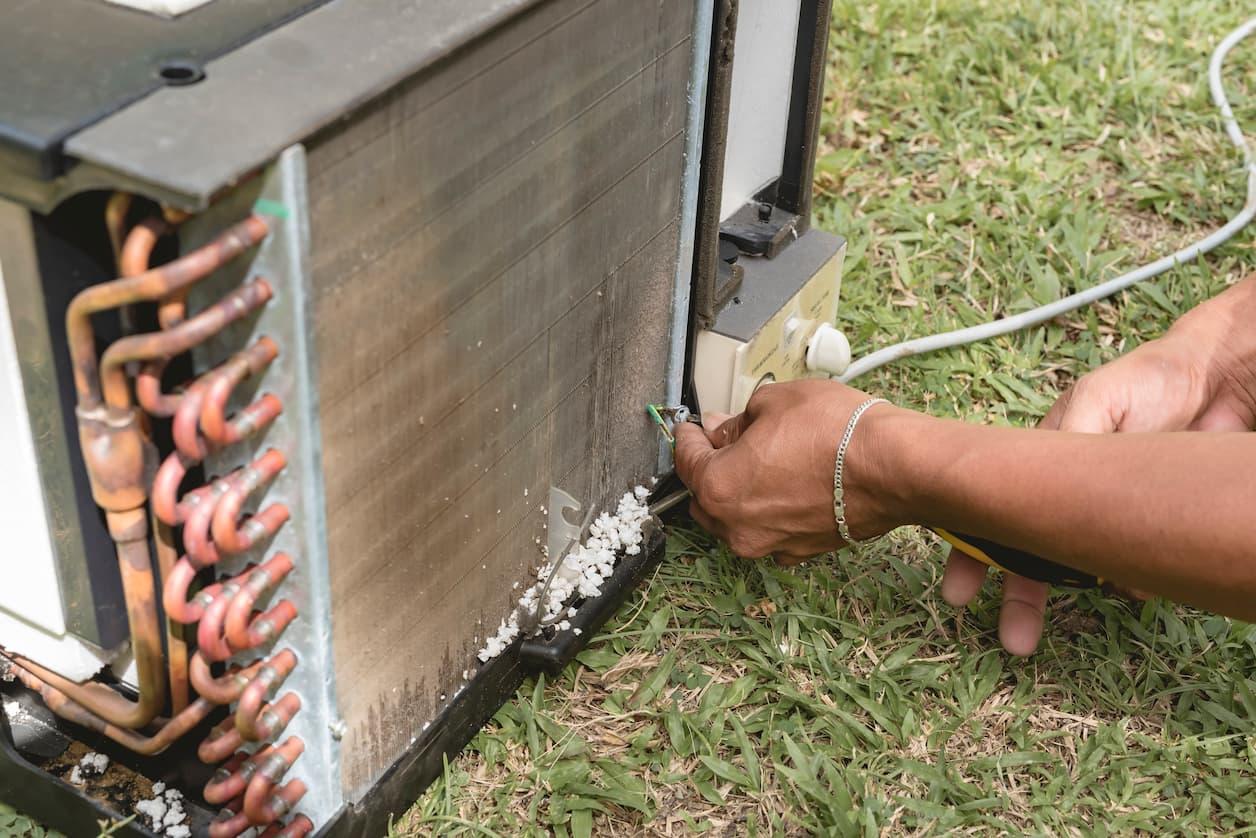
A standard garden hose at low pressure, sprayed from the inside of the unit outward through the fins, removes a significant amount of cottonwood, dust, and debris without damaging the fins. Do not use a pressure washer — the fin material bends easily and a bent fin reduces airflow. This is a task the technician will also do with chemical coil cleaner, but a pre-rinse saves time and shows them the baseline condition.
Run a Thermostat Test
On a day when outdoor temperatures are above 65°F, switch your thermostat to cooling mode and set it 5°F below the current indoor temperature. Let the system run for 15–20 minutes. If the air at the nearest supply register feels noticeably cooler than room temperature within 5–10 minutes of startup, the system is at least producing cooling. If it runs but does not cool, or if it does not start at all, note it for the technician. Do not run the system in cooling mode when outdoor temperatures are below 60°F — doing so can damage the compressor.
What We Commonly Find on Spring Tune-Ups in Northern Utah
After 47 years of serving Davis, Weber, Salt Lake, and Morgan counties, we have a reliable picture of what spring service calls uncover. These are not edge cases — they are patterns that repeat every year, and they are the primary reason spring maintenance pays for itself.
Weak or Failed Capacitors
Capacitors start and run the compressor and fan motors. They degrade gradually over time, and Utah's summer heat accelerates that process — capacitors in our climate typically last 5–8 years. By spring, many units have a capacitor that reads within spec on the capacitance meter but is operating at the low end of its tolerance. We replace capacitors that test below 90% of rated capacitance before summer. A capacitor that fails mid-July means no cooling until a technician can respond, often with a 2–4 day wait during peak season. Capacitor replacement in spring is a $60–$120 part swap; an emergency call in August costs significantly more in labor and priority fees.
Dirty Evaporator Coils
The evaporator coil inside your air handler is upstream of the supply air — everything that gets past the filter lands on it. Over a full season of operation, a thin layer of dust, pet dander, and particulates builds up on the coil fins. This layer acts as insulation, reducing heat transfer efficiency. A coil that is even 10% restricted reduces cooling capacity meaningfully and causes the system to run longer cycles to reach setpoint. We clean evaporator coils with a foaming no-rinse coil cleaner on most spring visits in this region.
Low Refrigerant
Refrigerant does not evaporate or get consumed — if a system is low, it has a leak. Small leaks at Schrader valves, flare fittings, or brazed joints are common in systems over 10 years old. A system that was slightly low heading into last summer loses a bit more over winter, and by spring may be 10–20% undercharged. Undercharged systems run continuously without ever reaching setpoint, drastically raising electricity bills and stressing the compressor. We check refrigerant pressures on every spring tune-up — not every contractor does this as a standard step, so it is worth confirming when you book.
Clogged Condensate Drains
Your AC removes humidity from the air as it cools — that moisture drips into a condensate pan and drains through a line to a floor drain or outside. Over winter, algae and mold growth can partially or fully block that drain line. A blocked condensate drain causes the pan to overflow, triggering a float switch that shuts down the system. We flush and treat condensate drains with algaecide tablets on every spring visit to prevent this common nuisance call in July and August.
Signs Your AC Needs More Than a Tune-Up This Spring
A tune-up is maintenance — it keeps a functional system running well. Some systems have crossed the line where maintenance is no longer the right answer. Here are the signs we use to recommend a repair or replacement conversation instead:
- Age over 15 years: Central AC systems have a useful life of 15–20 years under good maintenance conditions in Utah's climate. A system approaching or past 15 years that needs a significant repair — compressor, coil replacement, or refrigerant conversion — is often better replaced than repaired, especially if it uses R-22 refrigerant (phased out as of 2020 and now expensive to source).
- Compressor drawing high amperage or short-cycling: A compressor that draws above nameplate amperage or turns on and off rapidly is failing internally. Compressor replacement costs 60–80% of a new system price — in most cases, replacement is the better investment.
- Repeated refrigerant recharges: If your system needed refrigerant added last spring, and needs it again this spring, you have an active leak. Continuing to recharge without finding and repairing the leak accelerates compressor wear and is increasingly expensive as R-410A prices rise. At that point, a leak search and repair or a new system evaluation is the right path.
- Visible coil damage or cabinet rust: Physical damage to the evaporator coil, significant cabinet corrosion, or a cracked heat exchanger in a furnace connected to the same air handler are situations where maintenance has limited value.
If your system is showing any of these signs, a spring maintenance visit with us will include an honest assessment of whether repair or replacement is the better path. We do not push replacement when repair makes sense — and we will tell you directly when repair no longer does. You can also explore our AC installation options if a replacement conversation is warranted.
Frequently Asked Questions
When should I schedule a spring AC tune-up in Utah?
Schedule in April or early May — before northern Utah's first 90°F days arrive in late May or June. Booking early ensures availability and gives you time to address any issues before summer heat sets in. By mid-May, our schedule typically extends 2–3 weeks out.
What does a spring AC tune-up include?
A professional spring AC tune-up includes cleaning evaporator and condenser coils, checking refrigerant charge, testing capacitors and contactors, inspecting electrical connections, verifying airflow at supply registers, lubricating motors, checking the condensate drain, testing the thermostat in cooling mode, and inspecting the blower wheel and air handler cabinet. A thorough tune-up covers 20–25 inspection points.
How much does a spring AC tune-up cost in Utah?
Spring AC tune-ups in northern Utah typically range from $80–$150 for a single system. The cost is modest relative to the problems a tune-up prevents. A failed capacitor on a 100°F day costs $150–$300 in parts and emergency labor; low refrigerant caught in spring avoids a no-cool emergency call in July.
Can I do my own spring AC maintenance in Utah?
Homeowners can safely replace the air filter, clear debris from around the outdoor unit, rinse the condenser fins with a garden hose, and run a thermostat test in cool mode. Refrigerant checks, chemical coil cleaning, electrical testing, and compressor diagnostics require a licensed HVAC technician and EPA 608 certification for refrigerant handling.
How long does a spring AC tune-up take?
A thorough spring AC tune-up typically takes 60–90 minutes for a single-system home. Homes with two systems, heat pumps, or units with deferred maintenance may take longer. If the technician finds a repair issue — a failing capacitor, dirty coils requiring chemical treatment, or low refrigerant — add 30–60 minutes.
What happens if I skip spring AC maintenance?
Skipping spring maintenance increases the risk of a mid-summer breakdown during Utah's hottest days, when emergency service wait times are longest. Dirty coils reduce efficiency by 10–15%, raising monthly utility bills. Undetected refrigerant leaks cause compressor damage over time — a $1,500–$3,000 repair compared to a $200–$400 spring recharge. Well-maintained systems also last 2–5 years longer than neglected ones.
Schedule Your Spring AC Tune-Up in Northern Utah
Salmon HVAC has been keeping northern Utah homes comfortable since 1979. We serve Davis, Weber, Salt Lake, and Morgan counties — and our spring schedule fills fast once temperatures climb.