Published June 1, 2026 • 8 min read
- Most AC repairs in Salt Lake City cost $150–$650. Capacitors and contactors are on the low end; blower motors and refrigerant work run higher.
- The most common SLC summer failures: capacitors, refrigerant leaks, clogged condensate drains, and frozen coils from cottonwood debris.
- Running an AC that isn't cooling properly accelerates compressor failure — a $250 repair can become a $1,500+ compressor replacement.
- Salt Lake City sits at 4,226 feet elevation, which affects HVAC equipment capacity and commissioning — local experience matters.
- Salmon HVAC has served Salt Lake City since 1979. Same-day service available for most calls placed before noon.
Salt Lake City summers are unforgiving. Temperatures regularly climb above 100°F in July and August, and the valley's basin geography means nighttime lows don't drop nearly as much as they do in Davis County to the north. When your AC stops cooling — or stops running entirely — you're not dealing with a minor inconvenience. You're dealing with a health risk, especially for children, elderly family members, and pets.
This guide covers what SLC homeowners actually need to know when their AC fails in summer: the most common problems, what repairs cost, what a service call looks like, and a few Salt Lake–specific factors that most generic HVAC guides miss entirely.
Why AC Failures Hit Harder in Salt Lake City
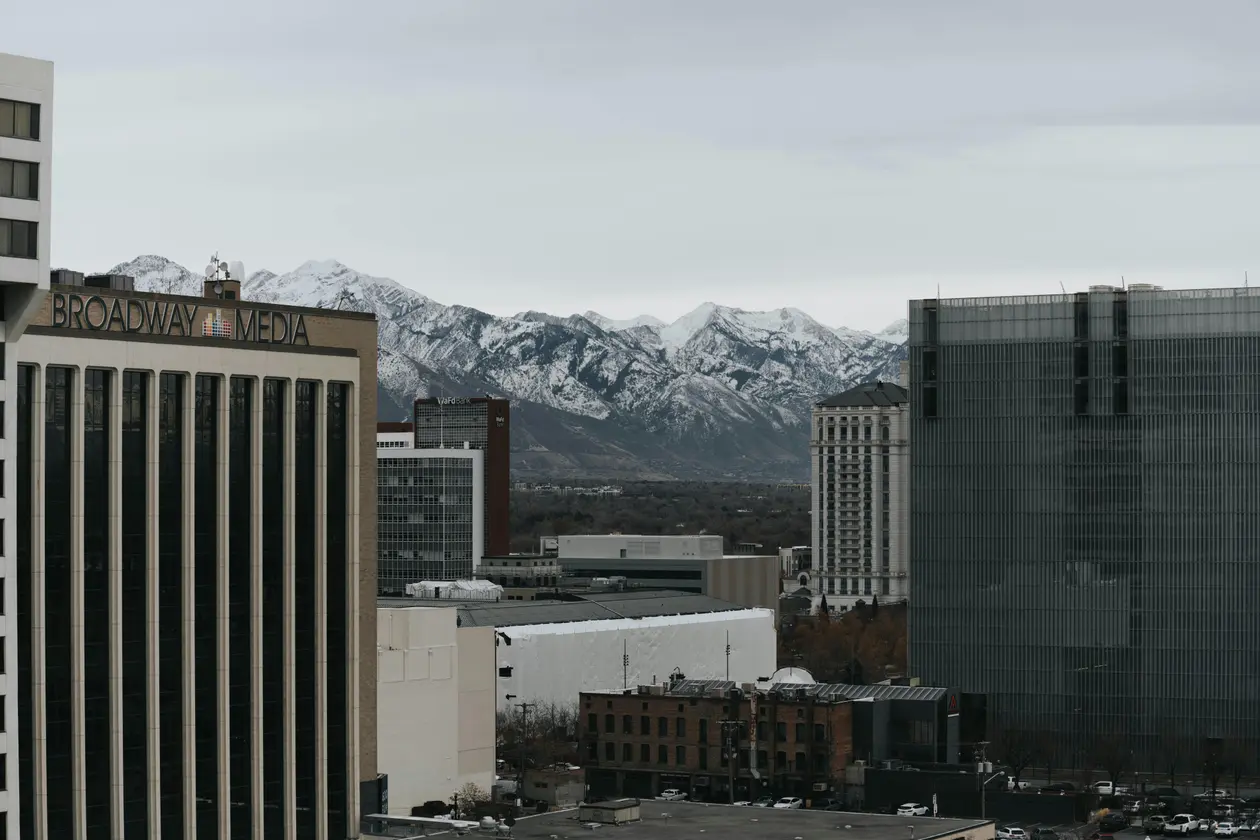
Salt Lake City's geography creates HVAC conditions that are distinctly different from many other cities. A few things that matter:
- Basin heat retention. The Salt Lake Valley sits in a bowl surrounded by mountains. Heat builds through the day and doesn't dissipate as quickly overnight as it does in open terrain. A home that reached 85°F indoors during a Davis County summer might hit 90°F under the same outdoor conditions in an urban SLC neighborhood.
- Urban heat island effect. Dense neighborhoods like Sugar House, the Avenues, 9th & 9th, and downtown SLC absorb and radiate heat from pavement, buildings, and reduced tree cover. This can add several degrees to the effective cooling load compared with suburban neighborhoods at similar elevations.
- Altitude. Salt Lake City sits at 4,226 feet above sea level. HVAC equipment operates slightly differently at elevation — refrigerant pressures, combustion efficiency, and measured capacity all vary from sea-level specs. This matters when diagnosing problems and when commissioning new equipment or verifying refrigerant charge after a repair.
- Cottonwood season. Late May and June bring cottonwood fiber that acts like insulation on condenser coils and air filters. A condenser coil that's 30% blocked by cottonwood runs significantly harder — this is one reason we see an uptick in AC failures in early summer before homeowners realize their outdoor unit is clogged.
The Most Common AC Problems in Salt Lake City
Most AC failures are not mysterious. The same handful of problems account for the vast majority of service calls across SLC every summer:
Failed capacitor or contactor
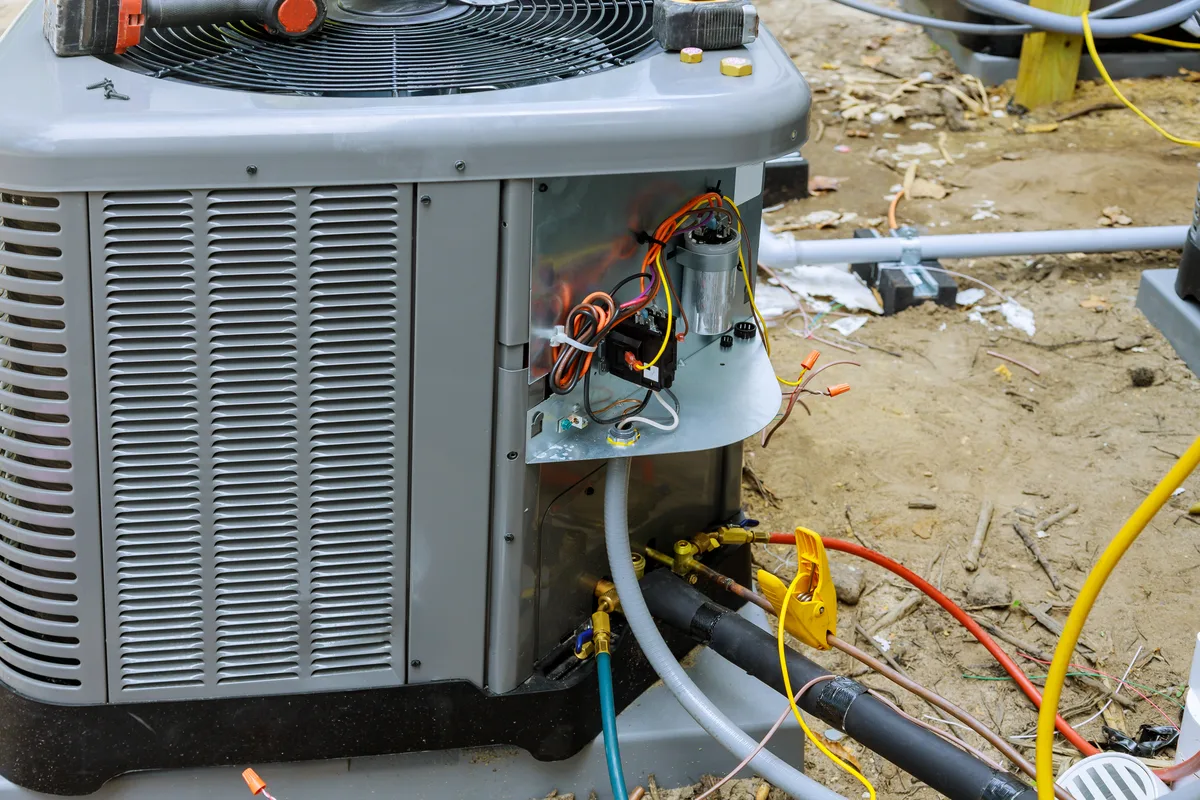
This is the single most common AC failure we see. Capacitors store and release the charge that starts your compressor and fan motors. In Utah's heat, they degrade faster than their rated life suggests. A failed capacitor usually causes the system to hum but not start, or to run but not cool. It's a quick repair — typically under an hour — and the parts are inexpensive.
Low refrigerant from a slow leak
Refrigerant doesn't "run out" like fuel — if your system is low, there's a leak. Slow leaks at service valves, coil connections, or the indoor coil are common in systems more than eight to ten years old. Low refrigerant means the system runs constantly, never reaches setpoint, and the indoor coil may ice over. The repair involves finding and fixing the leak, then recharging the system to manufacturer spec.
Frozen evaporator coil
A frozen coil is a symptom, not a root cause. The two most common causes in SLC: restricted airflow (dirty filter, blocked return, or cottonwood-clogged coil) and low refrigerant. When the coil freezes, warm air stops moving through the system and the house heats up fast. If you see ice on your indoor air handler or on the refrigerant lines, shut the system off and run the fan-only mode to thaw — then call for service.
Clogged condensate drain
Your AC removes humidity from indoor air, and that water has to go somewhere. The condensate drain line can clog with algae, sediment, or debris — especially in older SLC homes where the drain may not have been serviced in years. A backed-up drain overflows into the drain pan, and if the pan fills, water can damage ceilings, walls, and flooring. Most clogs clear quickly, but ignored overflow can become expensive.
Dirty condenser coil
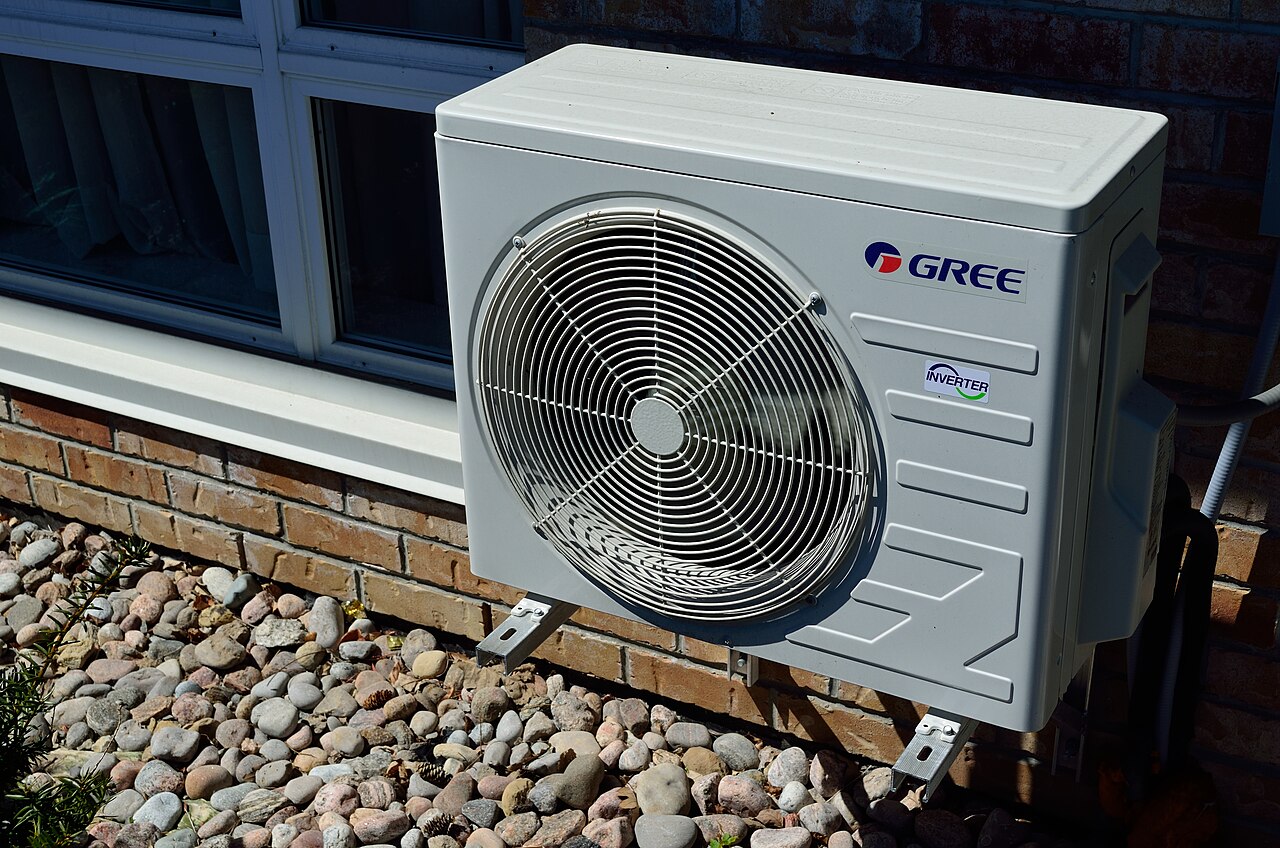
The outdoor unit expels heat through its condenser coil. In Salt Lake City, dust, dirt, cottonwood fiber, and airborne particulate from the valley's inversion seasons can coat the coil and significantly reduce its ability to reject heat. The system compensates by running harder and longer, raising your utility bill and accelerating wear on the compressor. Annual coil cleaning prevents this and can restore meaningful efficiency.
Failed blower motor
The blower motor moves conditioned air through your ductwork. Bearings fail, capacitors fail, and older motors run hot and eventually quit. A failed blower means no airflow even if the outdoor unit is running fine. It's a more involved repair than a capacitor — typically a few hours — but straightforward for an experienced technician.
AC Repair Costs in Salt Lake City
Prices vary by what's wrong, the age of your equipment, and the refrigerant type your system uses. Here are realistic ranges for the repairs we perform most often in Salt Lake City:
| Repair type | Typical cost range |
|---|---|
| Capacitor or contactor replacement | $150–$280 |
| Refrigerant recharge (R-454B / R-410A) | $200–$450 |
| Refrigerant recharge (R-22 — older systems) | $350–$600+ |
| Refrigerant leak diagnosis and repair | $250–$550 |
| Blower motor replacement | $300–$550 |
| Evaporator or condenser coil cleaning | $150–$300 |
| Condensate drain clearing | $100–$175 |
| Thermostat replacement (standard) | $150–$250 |
| Thermostat replacement (smart) | $250–$400 installed |
| Compressor replacement | $900–$1,900 |
A note on R-22: Systems manufactured before 2010 typically use R-22 refrigerant, which was phased out and is no longer manufactured. R-22 recharges are expensive because supply is limited to recovered refrigerant. If you have an older R-22 system and it needs a recharge, it's worth getting a replacement estimate alongside the repair quote — the math often favors replacing the system rather than repeatedly recharging an aging R-22 unit.
All estimates from Salmon HVAC are free and provided before any work begins. You'll know what the repair costs before we touch anything.
What Happens During an AC Repair Call in SLC
If you haven't had HVAC service before or it's been a while, here's what to expect from a Salmon HVAC service call in Salt Lake City:
- Scheduling. Call us or submit a quote request. For most calls placed before noon on weekdays, we can schedule same-day service.
- Technician arrival. We confirm your appointment window and send a technician with a fully stocked service truck. From our Centerville base to Salt Lake City is a 25–35 minute drive, depending on traffic and which part of SLC you're in.
- Diagnosis. The technician inspects both the indoor and outdoor components — checking refrigerant pressure, electrical connections, capacitors, contactors, coil condition, drain lines, thermostat operation, and airflow. We use digital manifold gauges and electrical meters, not guesswork.
- Upfront quote. Once we know what's wrong, you get a fixed-price quote before any work starts. No surprises on the invoice.
- Repair. We carry the most common parts — capacitors, contactors, motors, drain treatment — so most repairs happen the same visit.
- Verification. After the repair, we run the system through a full cycle and verify temperatures, pressures, and electrical draw are within manufacturer spec before we leave.
Salt Lake City–Specific Considerations for AC Repair
Older housing stock in SLC neighborhoods
Neighborhoods like the Avenues, Sugar House, 9th & 9th, Liberty Wells, and the east bench include significant older housing — 1940s through 1970s construction that often has narrower mechanical rooms, older ductwork not designed for modern high-efficiency equipment, and in some cases, original knob-and-tube or early-era electrical that can complicate HVAC service work. Technicians who work regularly in SLC know these buildings. Technicians who primarily work in newer suburban construction may not.
Altitude adjustments
At 4,226 feet, Salt Lake City sits high enough that refrigerant pressures read differently than at sea level. Equipment rated in BTUs at sea level delivers slightly less capacity at altitude. This matters for proper diagnosis — a technician who doesn't account for elevation may misread refrigerant charge and either overcharge or undercharge a system. It also matters when selecting replacement equipment, since units need to be appropriately sized for both the home's square footage and the altitude at which they'll operate.
Cottonwood season and coil maintenance
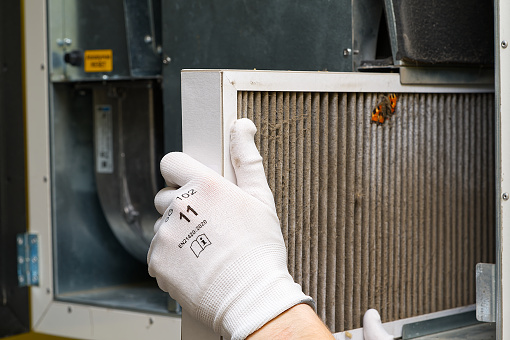
Cottonwood trees are common throughout Salt Lake's older neighborhoods. In late May and June, cottonwood fiber accumulates on condenser coils and air filters at rates that can surprise homeowners who haven't dealt with it before. If your AC starts struggling in early summer, check your filter and have your outdoor condenser coil inspected — a clogged coil can drop system capacity significantly. An annual coil cleaning scheduled for early May (before the hottest weather) prevents most cottonwood-related efficiency problems.
Inversion season prep
While SLC summers are AC season, winter inversion events are a related concern. Salt Lake's PM2.5 levels during inversions regularly exceed EPA standards. Your HVAC system — specifically the filtration — is your best tool for protecting indoor air quality during these events. If a technician is at your home for an AC issue, it's worth asking about upgrading your filtration to MERV 13 and having the system checked before inversion season starts.
Repair or Replace? A Practical Guide for SLC Homeowners
Not every AC problem warrants a repair. Here's a practical framework:
- Repair when the system is under 10–12 years old, the problem is a single failed component (capacitor, contactor, drain), and the repair cost is under 30–40% of what a replacement would cost.
- Replacement deserves serious consideration when the system is 12–15+ years old, it's had multiple repairs in recent years, the compressor has failed, refrigerant is R-22 (expensive and limited supply), or the repair estimate is more than $600–$800 on an aging system.
- The 50% rule: If the repair cost exceeds 50% of what a new, comparable system would cost, most HVAC professionals — including us — will recommend replacement. You get a new system, a warranty, and a more efficient unit.
For a deeper look at the repair-vs-replace decision, see our guide on how long AC units last in Utah. The cost analysis applies equally to Salt Lake City homes.
What to Look for in an AC Repair Company in Salt Lake City
Salt Lake City has no shortage of HVAC contractors. Here's what separates a reliable one from the rest:
- Utah contractor license. Verify the contractor holds a current Utah DOPL license. This is public record. An unlicensed contractor has no accountability if work is done incorrectly or causes property damage.
- Upfront pricing. You should receive a fixed-price quote before any work begins. Contractors who won't provide pricing upfront, or who bill by the hour for diagnostic work without a cap, create unnecessary risk for the homeowner.
- Same-day availability in summer. In peak summer season, same-day service is a real differentiator. A company that books out three to five days when it's 100°F outside isn't serving SLC customers well.
- Upfront pricing. You should receive a fixed-price quote before any repair work begins.
- Local experience. A contractor based in Salt Lake County or northern Utah who works regularly in SLC neighborhoods understands the housing stock, altitude considerations, and local utility rebate programs that an out-of-area contractor may not.
Salmon HVAC's Salt Lake City AC Repair Service
Salmon HVAC has served Salt Lake City and Salt Lake County since 1979 — the same year the company started in Centerville. We're a Daikin Comfort Pro Authorized Dealer, which means factory training on the industry's most efficient equipment, but our technicians are certified on every major brand: Carrier, Trane, Lennox, Rheem, York, Goodman, and others.
For Salt Lake City, our typical response time from Centerville is 25–35 minutes. For most calls placed before noon on weekdays, we schedule same-day service. We provide an upfront, fixed-price quote before we touch your system.
If your AC is struggling this summer, call us at (801) 397-0030 or request a quote online. We'll tell you honestly what's wrong, what it costs to fix it, and whether repair or replacement makes more sense given the age and condition of your system.
AC Not Cooling in Salt Lake City?
Salmon HVAC has served SLC since 1979. Same-day service available on most weekday calls. Upfront repair pricing before we touch anything.
Frequently Asked Questions
How much does AC repair cost in Salt Lake City?
Most AC repairs in Salt Lake City run between $150 and $650. A capacitor or contactor replacement typically costs $150–$280. A refrigerant recharge runs $200–$500 depending on refrigerant type. Blower motor replacement usually costs $300–$550. Compressor replacements can run $900–$1,900, at which point replacement often makes more financial sense for older systems. All estimates are free — you get an upfront price before any work begins.
Does Salmon HVAC service Salt Lake City?
Yes. Salmon HVAC has served Salt Lake City and Salt Lake County since 1979. We're based in Centerville and dispatch technicians to SLC, South Jordan, Sandy, and surrounding communities. For most calls placed before noon, we can schedule same-day service.
What are the most common AC problems in Salt Lake City in summer?
The most common failures we see in SLC are failed capacitors and contactors, low refrigerant from slow leaks, clogged condensate drains, frozen evaporator coils (often caused by cottonwood fiber blocking airflow in late May and June), and dirty condenser coils from SLC's dust and seasonal cottonwood debris. Most of these are same-day repairs.
How quickly can Salmon HVAC respond to an AC repair call in SLC?
For calls placed before noon on weekdays, we typically schedule same-day service. For after-hours emergencies, 24/7 service is available — call (801) 397-0030.
When should I replace my AC instead of repairing it?
A practical rule: if your AC is more than 12 years old and the repair cost exceeds 40–50% of what a new system would cost, replacement usually makes more sense financially. Salt Lake City's long, hot cooling season accelerates wear on aging equipment. Older R-22 systems are also significantly more expensive to recharge due to refrigerant supply restrictions — if you have an R-22 system that needs recharging, get a replacement quote alongside the repair estimate.