
Published August 20, 2026 • 9 min read
- Set the thermostat to 55°F — never fully off. That keeps the pipes inside your walls and floors above freezing while you're away.
- Use your smart thermostat's away or vacation hold in HEAT mode, set for your exact travel dates, so it doesn't drift lower on its own.
- Turn on freeze / low-temp alerts so your phone warns you if the indoor temperature drops — your first sign the furnace quit.
- Back it up: open under-sink cabinets on exterior walls, let a faucet drip, and for long trips consider shutting off and draining the water main.
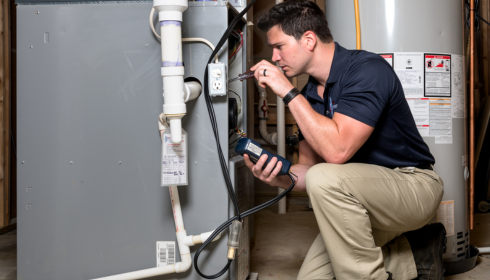
- Get the furnace tuned before you go. The worst time for a breakdown is when no one's home to notice. Call Salmon HVAC at (801) 397-0030.
The holidays are peak travel season, and they land right in the coldest stretch of a Northern Utah winter. That combination — an empty house plus a hard freeze — is exactly when frozen and burst pipes happen. A pipe that lets go while you're gone doesn't just crack; it can pour water into your home for days before anyone notices, turning a relaxing trip into a five-figure insurance claim.
The good news is that preventing it is almost entirely about one decision you make on your way out the door: what to do with the thermostat. Do it right and your furnace quietly keeps the house safe on a fraction of the fuel. Do it wrong — usually by turning the heat off to "save money" — and you're rolling the dice on your plumbing. Salmon HVAC has kept Davis, Weber, Salt Lake, and Morgan county homes comfortable since 1979, and this is the guidance we give every customer heading out of town in December.
The One Number That Matters: 55°F, Not Off
If you remember nothing else from this article, remember this: set your thermostat to 55°F before you leave, and leave the system in HEAT mode the whole time you're gone. Most HVAC professionals and home insurers land on the same range — keep a vacant home between 55°F and 60°F in winter. Fifty-five is the practical floor; if your home has cold rooms or plumbing running through exterior walls, nudge it up to 58–60°F.
Why not turn it off entirely? Because the pipes you most need to protect aren't in your living room — they're inside wall cavities, under floors, and in crawl spaces and garages, where it's already several degrees colder than the thermostat reads. When you shut the heat off, those hidden spaces are the first to drop below freezing, and they do it faster than most people expect. Keeping the whole house at 55°F keeps that buffer of warmth around the plumbing.
And no, 55°F is not expensive. Setting back from a normal 68°F to 55°F for a week or two of travel meaningfully lowers your heating bill for those days — you capture most of the savings people are chasing when they reach for the "off" switch, without any of the risk. For the full rundown on protecting your plumbing, our guide to preventing frozen pipes this winter goes deeper on the plumbing side.
Why 55°F Is the Magic Number for Utah Homes
Pipes are generally at risk of freezing once the temperature around them approaches about 20°F, and Northern Utah delivers those conditions regularly from December through February. Our valleys sit at altitude, and when a cold front or a stubborn inversion settles over the Wasatch Front, overnight lows can dive into the single digits and stay there for days.
Here's the part homeowners underestimate: the temperature inside an exterior wall can be 10–15°F colder than the air in the room next to it. So a thermostat reading a cozy-sounding 45°F might mean the copper line feeding an outside hose bib or a second-floor bathroom on the north wall is already flirting with freezing. Setting the thermostat to 55°F builds in the margin those hidden, poorly insulated runs need. It's not about keeping the house comfortable for no one — it's about keeping the coldest corners above the danger line.
Utah's dry winter air adds a second reason not to run the system too cold or shut it off: big indoor temperature swings are hard on finishes, wood floors, and anything sensitive to humidity changes. A steady 55°F keeps conditions stable. If you want to understand how our climate stresses HVAC equipment in general, how altitude affects your HVAC system is worth a read.
Smart Thermostat Away Mode: Setting It Up Before You Go
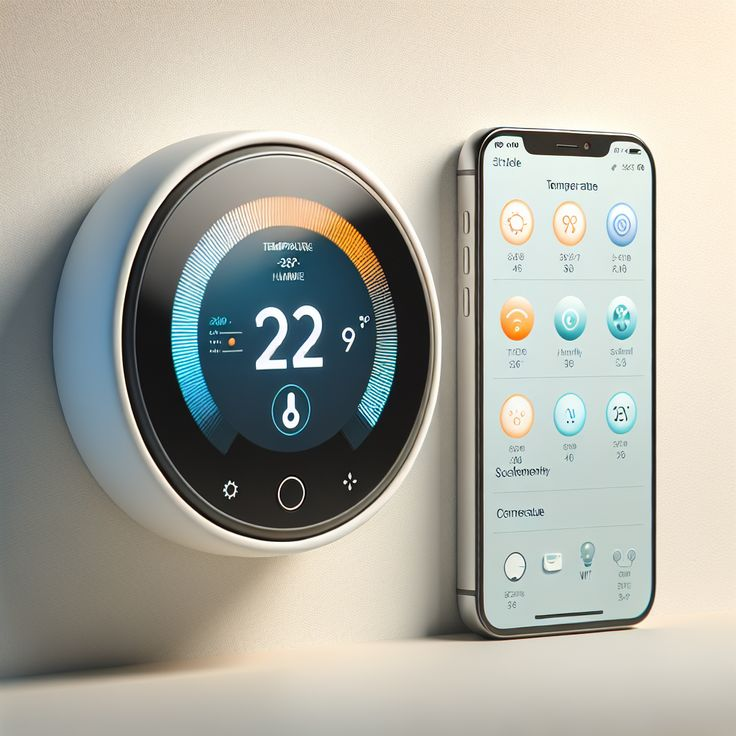
If you have a smart thermostat — a Nest, ecobee, Honeywell, or the Daikin One we often install — it's the ideal tool for a trip, because it can hold a safe temperature and tell you if something goes wrong. Don't just tap the temperature down and walk away, though. Take a minute to set it up deliberately.
1. Schedule a vacation or "hold" for your exact dates
Almost every smart thermostat has a vacation, away, or hold feature. Create an event that runs from your departure to your return and set the heat to 55°F. Using the dated vacation feature — rather than a manual hold — means the thermostat automatically resumes your normal comfort schedule the day you get back, so you walk into a warm house instead of a chilly one.
2. Make sure the mode is HEAT — and won't drift
Confirm the system mode is set to Heat, not Off, not Cool, and not "Auto" changeover. Also watch out for smart "eco" or occupancy-learning features: some thermostats, sensing no motion for days, will happily let the temperature sag well below your setpoint to save energy. A fixed vacation hold at 55°F overrides that guessing. Set the fan to Auto so the blower isn't running around the clock for nothing.
3. Turn on freeze and low-temperature alerts
This is the feature that earns a smart thermostat its keep while you travel. In the app's alert or notification settings, enable a low-temperature alert — typically you can set a threshold like 45°F — so that if the indoor temperature ever falls below it, you get a text or push notification. That message is your early warning that the furnace has failed, the power went out, or something else has gone wrong, giving you a chance to call a neighbor or a technician before pipes freeze rather than after. Some models also send a high-temp or humidity alert; enable whatever your unit offers.
4. Confirm it's actually online
An alert only reaches you if the thermostat is connected. Before you leave, open the app from your phone (off Wi-Fi is fine) and confirm it shows the thermostat as online and responsive. If your home Wi-Fi tends to drop, that's worth fixing before a two-week trip — a smart thermostat that's offline is just a regular thermostat that can't warn you. New to these devices? Our overview of whether smart thermostats are worth it covers the basics.
Beyond the Thermostat: A 7-Point Vacant-Home Checklist
The thermostat does most of the work, but a few small steps close the gaps the furnace can't reach on its own. Run through these before you go:
- Open cabinet doors under sinks on exterior walls. Kitchen and bathroom vanities often hide the coldest pipes; opening the doors lets heated room air circulate around them.
- Let a faucet or two drip. A slow trickle on the fixtures farthest from where water enters the house keeps water moving, and moving water is far harder to freeze. Choose faucets fed by pipes on exterior walls.
- Keep the garage door closed. If there's plumbing or a water heater in the garage, an open door in a cold snap is an invitation to freeze.
- Disconnect garden hoses and shut off outdoor spigots. A hose left attached traps water in the bib, which can freeze and split the line back inside the wall.
- Replace the furnace filter. A clean filter helps the furnace run efficiently and reduces the chance it overheats and trips off while you're gone. Our Utah air-filter replacement guide has the details.
- Check your CO and smoke detectors. The furnace will cycle the whole time you're away; working detectors are non-negotiable when combustion equipment is running in an empty house.
- Ask someone to check in. A neighbor, friend, or family member stopping by every few days can catch a problem your thermostat alert doesn't — and knows to call for help.
Going away for more than a couple of weeks, or leaving a second home or rental empty for the season? Then it's worth taking the extra step of shutting off the main water supply and draining the lines (open the lowest faucets to let the water out after you close the main). With no water in the pipes, there's nothing to freeze — the surest protection of all for a long absence.
How Long Are You Leaving? Match the Setting to the Trip
The right approach scales with how long the house will sit empty and how cold it's forecast to get. Here's a quick reference:
| Length of absence | Recommended approach |
|---|---|
| A weekend (1–3 days) | Set back to 58–60°F. Simple hold; no need to drain anything. |
| A holiday trip (4–14 days) | Set to 55°F, use the dated vacation hold, enable freeze alerts, and run the 7-point checklist. |
| Extended (2+ weeks) or a cold snap forecast | Hold at 55–58°F, have someone check the house, and strongly consider shutting off and draining the water main. |
| Seasonal / vacant all winter | Shut off and drain the water supply, keep heat at 55°F, and arrange regular check-ins. Consider a monitored freeze alarm. |
Whatever the length, the thermostat stays in HEAT and never goes below 55°F while there's water in the pipes. The only time "off" is acceptable is after the plumbing has been fully drained.
The Northern Utah Reality: Cold Snaps, Inversions & Power
A couple of local factors make this more than a generic tip. First, our cold is streaky: a mild week can flip to a multi-day deep freeze with little warning, so setting for "average" December weather isn't enough — set for the cold snap that could arrive while you're gone. Second, winter storms and heavy inversions occasionally bring power flickers or outages, and a furnace won't run without electricity even if it burns gas. A smart thermostat's low-temperature alert is your safety net for exactly that scenario: if the power drops and the house starts cooling, you'll know.
If you rely on a heat pump or a ductless mini-split for winter heat, the same 55°F floor applies — just confirm the system is in heating mode and, for mini-splits, that any "away" or "10°C/heat-minimum" mode is engaged rather than off. And if your furnace is older or you skipped last fall's service, please don't leave town on a hope. A quick fall furnace tune-up catches the worn igniters and dirty flame sensors that cause mid-trip breakdowns.
Traveling This Winter? Get the Furnace Checked First.
A tune-up before you go is the cheapest insurance against a no-heat emergency in an empty house. Salmon HVAC serves Davis, Weber, Salt Lake, and Morgan counties — and we're here 24/7 if something does go wrong while you're away.
Don't Have a Smart Thermostat Yet?
You can still protect your home this winter with a basic programmable or manual thermostat — just set it to a fixed 55°F, confirm it's in HEAT, and lean harder on the checklist above (a neighbor check-in matters more when you don't have remote alerts). But if you travel regularly or manage a second property, a Wi-Fi thermostat pays for itself the first time a freeze alert saves you from a burst pipe. We install and set up smart thermostats as a quick add-on to any service call, and we'll make sure the away mode and alerts are configured correctly before you leave.
If a bigger comfort or efficiency upgrade is on your list, ask about it too — many improvements pair with flexible financing, and our team is happy to walk through the options. Not sure where to start? Reach out and we'll point you in the right direction.
What to Do If You Get a Freeze Alert While You're Away
If your phone pings with a low-temperature warning, don't panic — but do act. Call whoever can get into the house first: a neighbor, a family member, or a property manager. Have them confirm whether the furnace is running, check the thermostat, and make sure the power is on. If the furnace is out and the house is dropping, that's the moment to call for emergency repair. Our first-30-minutes heating emergency action plan and our no-heat furnace troubleshooting guide walk a helper through the safe checks step by step. Salmon HVAC's 24/7 emergency service is a phone call away at (801) 397-0030 — we'd rather get your furnace running tonight than clean up a flood next week.
Frequently Asked Questions
What temperature should I set my thermostat to when I leave my Utah home for the winter?
Set it to 55°F — never fully off. Most HVAC pros and home insurers recommend keeping a vacant home between 55°F and 60°F in winter. That keeps the air inside wall and floor cavities, where your plumbing usually runs, safely above freezing without paying to heat an empty house to 68°F. In Northern Utah, where a cold snap can push overnight lows into the single digits, 55°F is the sensible floor. If your home has known cold spots or plumbing on exterior walls, lean toward 58–60°F.
Can I turn the heat completely off if I'm only gone for the holidays?
No. Turning the furnace off to save a few dollars is the single most common cause of a burst-pipe disaster. A pipe in an exterior wall or unheated crawl space can freeze in a matter of hours once the house cools, and a burst pipe can release hundreds of gallons of water a day while you're away. The repair-and-water-damage bill dwarfs any savings. Keep the system running at a safe minimum of 55°F the entire time you're gone.
How do I set my smart thermostat to away or vacation mode?
In your thermostat's app (Nest, ecobee, Honeywell, Daikin One, etc.), create a scheduled hold or "vacation"/"away" event with a set-and-hold temperature of 55°F for your travel dates, and make sure the mode is HEAT — not Off, Auto changeover, or an eco/away setting that could drift lower. Then turn on low-temperature or freeze alerts so the app texts you if the indoor temperature falls below a threshold you set (around 45°F is common). That alert is your early warning that the furnace has failed while you're away.
Does keeping the heat at 55°F really save money versus my normal setting?
Yes. Every degree you set back over an extended period lowers your heating bill, and dropping from a normal 68°F down to 55°F for a week or two of travel is a meaningful cut without the risk of turning the system off entirely. The bigger "savings," though, is avoiding a frozen-pipe claim: a single burst pipe routinely causes thousands of dollars in water damage. Setting back to 55°F captures most of the savings while keeping your home protected.
What else should I do besides the thermostat to prevent frozen pipes while I'm away?
Open cabinet doors under kitchen and bathroom sinks on exterior walls so heated air reaches the pipes, let a couple of faucets drip slightly, and keep the garage door closed if there's plumbing in the garage. For longer trips, consider shutting off the main water supply and draining the lines, ask someone to check the house every few days, and make sure the furnace had its fall tune-up so it doesn't quit while you're gone. Working CO detectors and a fresh furnace filter round it out.