Winter comfort doesn’t have to mean higher energy bills. In Northern Utah, where furnaces run hard from the first cold snap in October straight through March, a smart thermostat is one of the easiest upgrades for staying warm while keeping costs under control. With the right device and a few well-chosen settings, you can make your home more efficient and cozy all season long. Here’s how to get the most from your system, brought to you by Salmon HVAC — serving Davis, Weber, Salt Lake, and Morgan counties since 1979.
Why Smart Thermostats Are Winter Essentials
Smart thermostats do more than look modern. They’re a simple way to improve comfort and make heating more affordable at the same time. By learning your routine and automatically adjusting the temperature throughout the day, a smart thermostat trims the hours your system runs when nobody needs it.
How much does that save? ENERGY STAR estimates a typical household saves around 8 percent on heating and cooling costs — roughly $50 a year — though cold-winter homes that lean on the furnace, like most along the Wasatch Front, often see more. The payoff comes from a schedule that actually matches your day, not from the device alone. Utah homeowners get an extra break here: Rocky Mountain Power’s Wattsmart program offers a rebate (about $75 as of 2025) on a qualifying ENERGY STAR Wi-Fi thermostat, which can cover a big chunk of the purchase. Check the current amount at wattsmarthomes.com before you buy, since program terms change.
Comfort That Fits Your Lifestyle
Old thermostats can’t adapt the way smart devices do. Smart thermostats keep your home at a comfortable temperature by reacting to weather changes, daily schedules, and even when you’re on the way home. With smartphone control, you can make quick adjustments from anywhere, and many models can connect to room sensors or other smart home devices for next-level comfort.
Choosing the Right Smart Thermostat
Before you buy a thermostat, make sure it works with your current HVAC system. Some thermostats are designed for heat pumps, others for complex multi-zone homes, and a few are built specifically for ductless mini-splits. That’s why checking compatibility is key — the wrong pairing can leave features greyed out or trigger the expensive backup heat it was supposed to avoid.
Salmon HVAC can help you choose a model that works best for your setup. Look for features like:
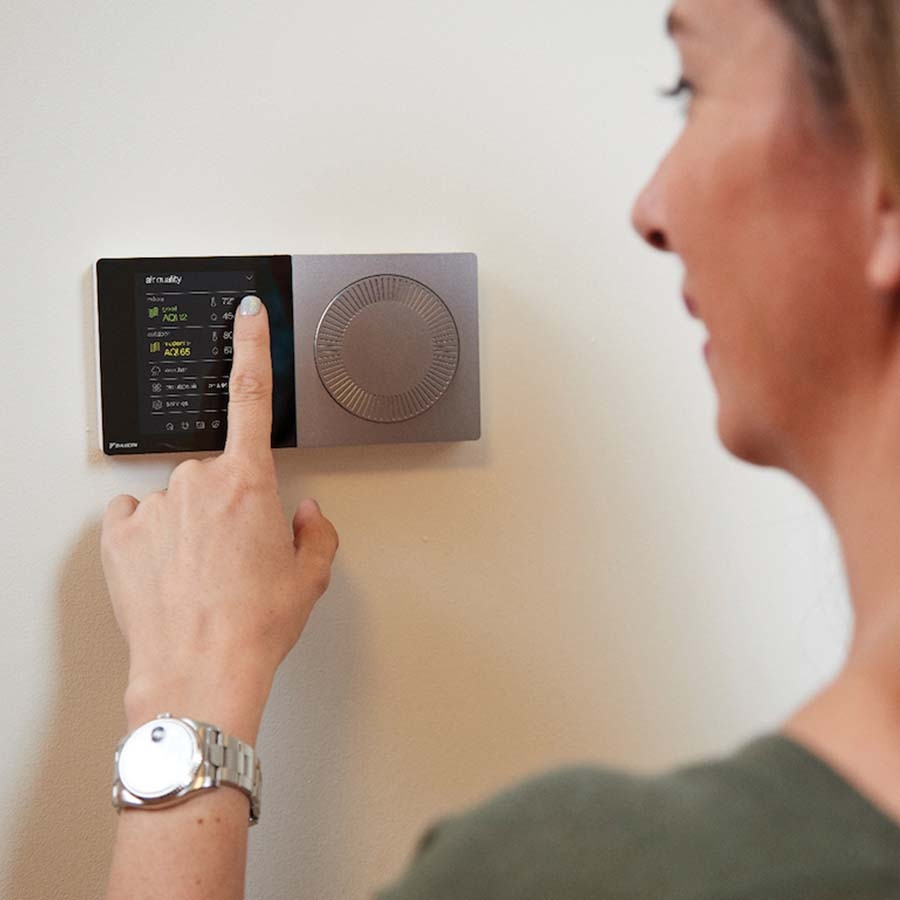
- Simple touchscreen controls
- Wi-Fi for remote access
- Automatic learning and scheduling
- Geofencing based on your location
- Works with Alexa or Google Assistant
- Energy tracking and reports
- Smooth integration with your existing HVAC system
The easier it is to use, the easier it is to save.
Simple Installation Steps
Once you’ve got your thermostat, installation is pretty straightforward:
- Turn off power to your heating system.
- Remove your current thermostat and label the wires.
- Attach each wire to the new unit.
- Mount the thermostat and restore power.
- Follow the setup steps on the screen.
Connecting to Wi-Fi is important so you can use features like app control and remote monitoring. Most models will walk you through the steps just follow the prompts, connect, and install any available updates.
Set It Up for Winter Savings
Here’s where the magic happens. Program your thermostat based on when you’re home and when you’re asleep or away. Lowering the temperature during those times can save a surprising amount of energy.
Many thermostats can even automate this for you with:
- Learning schedules
- Geofencing
- Zone control for different rooms
If your system allows zone heating, direct warm air only where you need it. You’ll stay just as comfortable with less wasted energy.
A Heat-Pump Warning for Utah Winters
Here’s a Northern Utah–specific catch worth knowing: deep setbacks that work beautifully on a gas furnace can backfire on a heat pump. If you let the house drop 8 or 10 degrees overnight, a heat pump often has to fire its backup electric or gas heat strips to claw the temperature back in the morning — and that backup heat is far more expensive to run than the heat pump itself. The result is a bill that goes up, not down.
The fix is simple: use a heat-pump-aware thermostat (or switch on its dedicated heat pump mode) and keep setbacks small — about 2 to 4 degrees. On a standard gas furnace, the old rule still holds and deeper 7-to-10-degree setbacks while you sleep or are away are fine. If you’re not sure which camp your system falls in, see whether heat pumps keep up in Utah winters or just ask us.
Away for the Holidays? Set a Safe Floor
Smart thermostats shine when you travel, but don’t turn the heat off entirely. A hard freeze while the house sits empty can burst pipes and cause thousands in damage. Hold the thermostat at a safe minimum — typically around 55°F — and use the app to confirm it from the road. Our full guide to smart thermostat and frozen-pipe settings for a vacant Utah home walks through exactly where to set things before you leave.
Keep Your System in Great Shape
Routine HVAC care keeps everything working at its best:
- Change air filters regularly
- Keep vents clear
- Install software updates
- Watch for unusual energy spikes
A smart thermostat can only save what your equipment allows, so pair it with good maintenance. Salmon HVAC recommends a yearly inspection before winter hits — our winter furnace tune-up guide covers what we check — to make sure your system is ready for cold weather. For more ways to trim heating costs this season, see our best practices for heating efficiency in Utah’s winter.
Troubleshooting Common Issues
Having an issue? Start here:
- For Wi-Fi problems, restart your router and check the signal strength.
- If the temperature readings seem off, avoid putting the thermostat near vents, windows, or warm appliances.
- Clean sensors and recalibrate when needed.
These small fixes can make a big difference in accuracy and comfort.
Final Thoughts
Setting up your smart thermostat for winter doesn’t have to be complicated. With the right device and a few smart settings, you can enjoy a warmer home and lower energy bills all season long. Salmon HVAC is here to help with installation, troubleshooting, and expert recommendations across Northern Utah.
Want help choosing a thermostat that matches your furnace, heat pump, or mini-split — and making sure it’s wired to qualify for the Wattsmart rebate? Call us at (801) 397-0030, request a free quote, or send us a message. We’ll get it set up right the first time.
FAQ
How much can a smart thermostat save on heating bills in winter?
ENERGY STAR estimates about 8 percent off heating and cooling costs (roughly $50 a year), with larger savings in cold climates like Northern Utah. Rocky Mountain Power’s Wattsmart program also offers a rebate (around $75 as of 2025) on a qualifying ENERGY STAR Wi-Fi thermostat — confirm current amounts at wattsmarthomes.com.
What features should I look for when choosing a smart thermostat in Utah?
Look for a simple touchscreen, Wi-Fi, automatic learning and scheduling, geofencing, Alexa or Google Assistant support, and energy reports. Most important, make sure it’s compatible with your system, whether you have a heat pump, mini-split, or multi-zone setup.
Can I control my smart thermostat remotely from my phone?
Yes. Most modern smart thermostats let you adjust the temperature from anywhere through a smartphone app — handy for warming the house on your way home or confirming settings while you travel.
Should I use deep temperature setbacks with a heat pump in Utah winters?
Be careful. Large overnight drops can force a heat pump’s backup heat strips on in the morning, costing more than you save. Keep heat-pump setbacks small (2–4 degrees); deeper 7-to-10-degree setbacks are fine on a standard gas furnace.
Do smart thermostats work with heat pumps and multi-zone heating systems?
Not all do — some are built for heat pumps, others for complex multi-zone homes. Check compatibility with your current HVAC setup before buying, or contact Salmon HVAC and we’ll match you to the right model.