Let's be honest nobody thinks about their furnace until it stops working. And that always seems to happen on the coldest night of the year, doesn't it?
That's exactly why a winter furnace tune-up matters more than you might think. It's not just about staying warm (though that's obviously important). It's about avoiding that 2 AM emergency call when temperatures drop and your heating system decides to take an unscheduled vacation.
Here in Northern Utah, that first hard freeze usually shows up in early to mid-October, and the furnace then runs almost nonstop through February. Heading into the 2026–27 heating season, the smartest move is to book your tune-up now, in the fall, before every homeowner in Davis, Weber, Salt Lake, and Morgan counties is calling at once. If you'd rather skip to it, you can request a free quote or call Salmon HVAC at (801) 397-0030 to get on the schedule early.
Why Your Furnace Needs Attention Before Winter Hits
Your furnace is basically the workhorse of your home during winter. It runs constantly, pushing heated air through your ducts to keep everyone comfortable. But here's the thing: all that hard work takes a toll. Filters get clogged with dust and debris. Burners accumulate soot. Heat exchangers can develop small cracks that become big problems.
When you skip regular maintenance, you're rolling the dice. Sure, your furnace might make it through the season. Or it might quit halfway through January, leaving you scrambling to find an available technician during peak season. At Salmon HVAC, we see this scenario play out every winter with homeowners who waited too long. It's also worth knowing the early warning signs your furnace needs repair so a small issue never turns into a no-heat night.
The good news? Most furnace failures are completely preventable with some basic upkeep. If you want a full pre-season walkthrough, our fall furnace prep checklist for Utah homes pairs perfectly with a professional tune-up.
What Actually Happens During a Professional Tune-Up
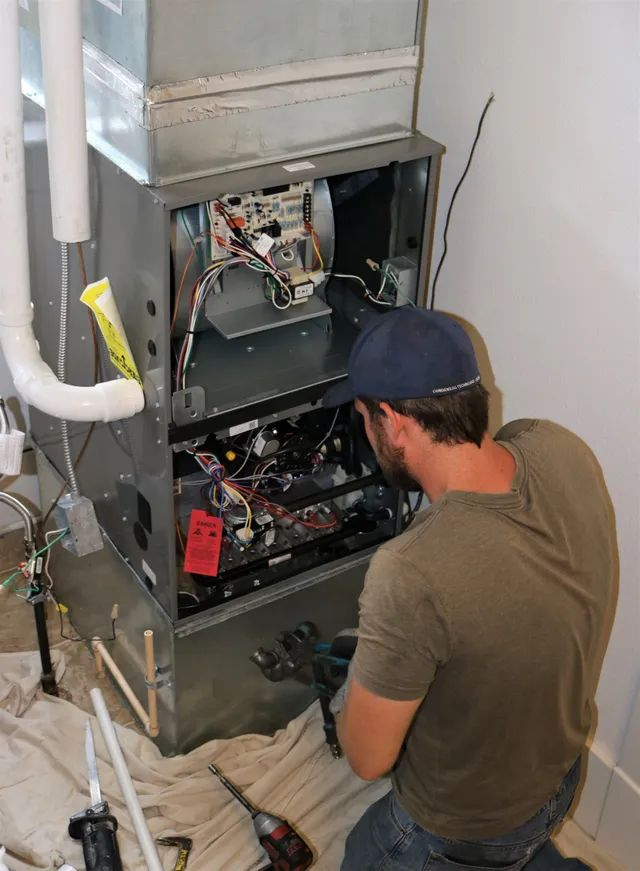
A proper furnace inspection goes way beyond just changing the filter, though that's certainly part of it. Technicians check your heat exchanger for cracks or corrosion since this component is responsible for actually warming the air in your home. Even minor damage here can lead to carbon monoxide leaks, which is obviously a serious safety concern.
The burners get a thorough cleaning too. When soot builds up, combustion becomes less efficient, meaning your furnace works harder and costs more to run. Clean burners mean better fuel usage and lower energy bills. The blower motor and fan also need attention since dust accumulation here restricts airflow and forces your system to strain unnecessarily.
Your thermostat gets tested for accuracy because what's the point of having heat if the system can't tell when to turn on and off? And speaking of safety, technicians check for gas leaks at every connection point and make sure your carbon monoxide detectors are functioning properly. This safety piece matters even more at Northern Utah's elevation, where thinner air changes how gas furnaces burn — a tech will confirm your burners are tuned for a clean, complete burn rather than producing extra carbon monoxide. If a tune-up ever turns up something worse, our furnace repair team can handle it same-visit.
The Money Side of Things
Here's where regular maintenance really pays off. The Department of Energy says proper furnace care can boost efficiency by up to 15%. That's not pocket change when you're talking about months of continuous heating.
Think of it this way: an efficiently running furnace uses less energy to maintain your desired temperature. Less energy means lower utility bills, plain and simple. And when you factor in that neglected furnaces tend to break down more often, requiring expensive emergency repairs, the annual tune-up starts looking like a pretty smart investment.
Most furnaces last between 15 and 20 years with proper maintenance. Skip the upkeep, though, and you could be shopping for a replacement much sooner than necessary. A new furnace isn't cheap, so extending the life of your current system makes financial sense. And if your unit is already near the end of that window, a tune-up is a good moment to talk honestly about whether repair or a new furnace installation is the smarter call before it fails mid-winter.
What You Can Handle Yourself
You don't need to call a professional for everything. Changing your air filter regularly is something any homeowner can tackle. Most filters need replacing every one to three months depending on your system and how much dust your home generates — and in Utah's dry, dusty climate, err toward the shorter end. Our Utah air filter replacement guide walks through picking the right MERV rating and swap schedule. This simple task improves both air quality and system efficiency.
You can also keep an eye out for warning signs like strange noises, unusual smells, or inconsistent heating. Banging or rattling often indicates loose parts, while a high-pitched whistle usually means airflow is restricted somewhere. A burning smell when you first turn on the heat is normal (it's just dust burning off), but if it persists, that's your cue to call Salmon HVAC.
When to Bring in the Experts
Some things are best left to professionals who have the training and equipment to do the job safely. Anything involving gas lines, electrical components, or the heat exchanger requires expertise. These aren't the kinds of repairs where you want to learn as you go.
Professional technicians can spot problems you'd never notice, like inefficient combustion or early signs of component failure. They have diagnostic tools that measure exactly how well your system is performing and can recommend specific improvements. Plus, they're insured, which matters when you're dealing with something as important as your home's heating system.
The best time to schedule your annual tune-up? Late fall, before the real cold sets in. That way, any issues get addressed before you actually need the heat. And if your furnace does quit on the coldest night despite your best efforts, keep our no-heat furnace troubleshooting guide handy — and remember Salmon HVAC offers 24/7 emergency HVAC service across Northern Utah.
Frequently Asked Questions
How much does a furnace tune-up typically cost?
As of 2026, most professional furnace tune-ups run between $80 and $200, though prices vary by company and what's included in the service. A basic inspection sits at the lower end, while a full inspection-plus-cleaning package lands closer to $125–$200. Either way, it's considerably cheaper than the emergency repairs — often several hundred to a few thousand dollars — that neglected furnaces trigger during winter. Want an exact number for your system? Send us a message and we'll walk you through what's included.
Can a dirty filter really affect my heating bill?
Absolutely. A clogged filter makes your furnace work harder to push air through, which means it runs longer to reach the desired temperature. That translates directly to higher energy consumption and bigger bills.
How do I know if my heat exchanger is cracked?
You likely won't spot this yourself since heat exchangers are internal components. Warning signs include unusual smells, visible soot, or your carbon monoxide detector going off. This is why professional inspections matter technicians have specialized equipment to check for cracks.
Is it normal for my furnace to smell when I first turn it on?
Yes, a brief dusty or burning smell when you first fire up your furnace for the season is completely normal. It's just accumulated dust burning off the heat exchanger. If the smell persists beyond 20-30 minutes or smells like gas, shut off your furnace and call a professional immediately.
What's the difference between a tune-up and a furnace cleaning?
A tune-up is comprehensive it includes cleaning but also involves inspecting all components, testing for safety issues, checking efficiency, and making necessary adjustments. A basic cleaning typically just focuses on removing dust and debris from accessible parts.