Published June 8, 2026 • 8 min read
- Most central AC systems can run during wildfire smoke because they recirculate indoor air, but fresh-air intakes, economizers, and evaporative coolers need special attention.
- EPA guidance recommends considering a MERV 13 filter, or the highest-efficiency filter your HVAC fan and filter slot can safely accommodate.
- Continuous fan operation can improve filtration during smoke, but only if the filter does not choke airflow or cause coil freezing.
- A clean room with a portable air cleaner is still useful, especially for children, older adults, and people with asthma, COPD, or heart disease.
- Salmon HVAC can inspect filter fit, static pressure, return-air leakage, duct condition, and indoor air quality options before Utah smoke season peaks.
Wildfire smoke is no longer a rare Utah problem. Smoke from fires in Utah, Idaho, Nevada, Oregon, California, and Canada can settle into Davis, Weber, Salt Lake, and Utah counties for days at a time. The sky looks hazy, the mountains disappear, and homeowners start asking the same question: should I run my air conditioner, or will it pull more smoke inside?
The short answer: you can usually run a central AC system during wildfire smoke if it is recirculating indoor air and has the right filtration. The details matter. Some homes have outdoor-air dampers, whole-home ventilators, swamp coolers, leaky return ducts, or one-inch filter slots that cannot safely handle a restrictive high-MERV filter. That is where a good HVAC plan matters.
Why Wildfire Smoke Is an Indoor Air Problem
Utah Department of Environmental Quality identifies fine particles, often called PM2.5, as the main health concern in wildfire smoke. These particles are small enough to get deep into the lungs and can aggravate asthma, bronchitis, COPD, heart disease, and other health conditions. Even healthy adults can feel burning eyes, scratchy throat, coughing, and shortness of breath when smoke levels climb.
Staying indoors helps, but it does not make a home smoke-proof. EPA explains that outdoor smoke can enter through open windows and doors, mechanical ventilation, bathroom and kitchen exhaust imbalance, leaky ducts, and small gaps around the building shell. Once smoke is inside, your HVAC system and portable air cleaners become the main tools for reducing particle levels.
Should You Run AC During Wildfire Smoke?
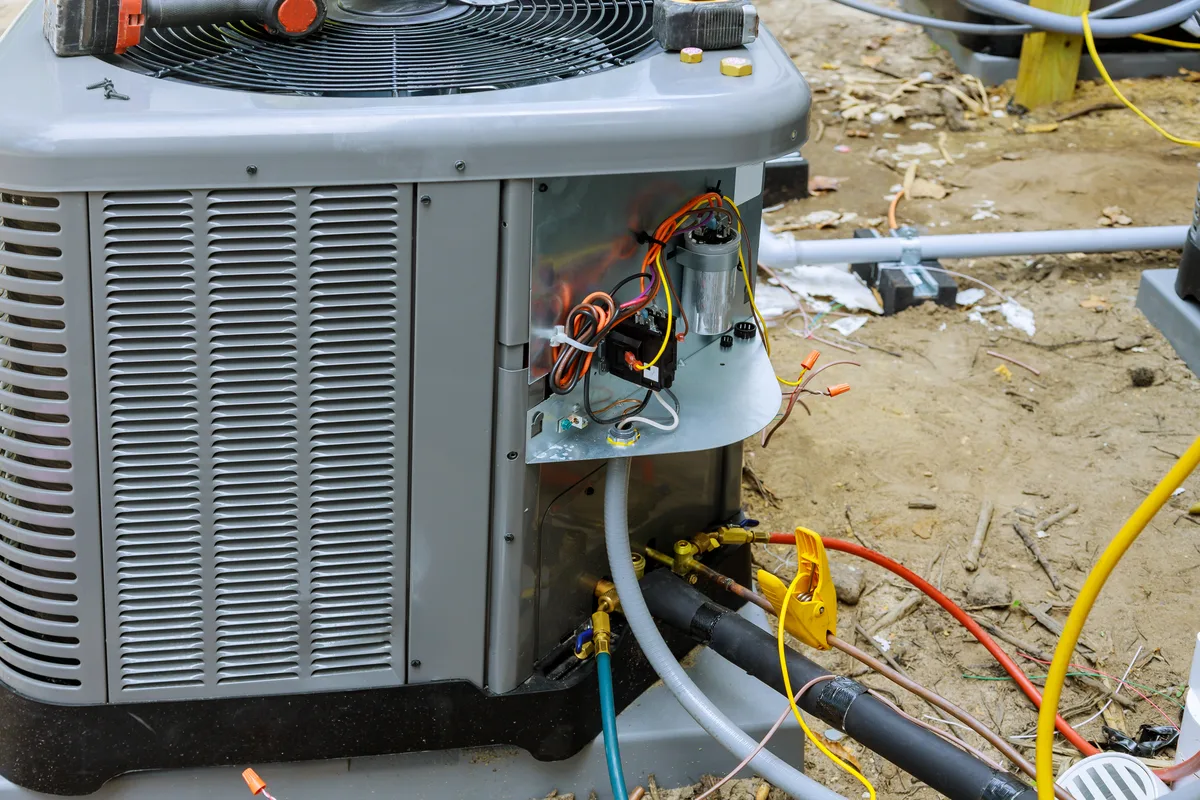
For most homes with central air conditioning, yes. A standard split AC or heat pump cools by recirculating indoor air across the indoor coil and through the duct system. It is not supposed to pull a steady stream of outdoor air into the house.
Before assuming your system is safe to run, check these exceptions:
- Fresh-air intake or ventilator: Some newer homes include an outside-air duct, ERV, HRV, or powered fresh-air system. During heavy smoke, it may need to be closed, disabled, or put in recirculation mode.
- Economizer on commercial systems: Some rooftop units bring in outdoor air when conditions are favorable. During smoke, the economizer should not be pulling smoky outdoor air into the building.
- Evaporative cooler: A swamp cooler works by bringing outdoor air into the home. During smoky conditions, that is usually the wrong tool for indoor air quality.
- Leaky return ducts: Return duct leaks in an attic, garage, crawlspace, or mechanical room can draw dusty or smoky air into the system.
If you are not sure whether your system has an outdoor-air intake, Salmon HVAC can identify it during an AC maintenance or indoor air quality visit.
Best HVAC Settings During Utah Smoke Days
| Setting or system | What to do during smoke |
|---|---|
| Central AC or heat pump | Run cooling as needed, with windows and doors closed. |
| Thermostat fan | Use circulation mode if available; use Fan On for short smoke events if airflow stays strong. |
| Fresh-air intake, ERV, or HRV | Close, disable, or set to recirculate if the system allows it. |
| Evaporative cooler | Avoid use during heavy smoke because it brings outdoor air inside. |
| Bathroom and kitchen exhaust | Use briefly when needed; long run times can pull replacement air through leaks. |
| Portable air cleaner | Run in the room where people spend the most time, especially bedrooms. |
One caution on the fan setting: more runtime means more air passes through the filter, which can help reduce particles. But if the filter is too restrictive for your system, continuous fan operation can reduce airflow, raise static pressure, freeze an AC coil, or stress the blower motor. Weak airflow, whistling returns, ice on the coil, or rooms that stop cooling are signs to back off and have the system checked.
What MERV Filter Rating Works for Wildfire Smoke?
EPA recommends considering a portable air cleaner or a high-efficiency HVAC filter before smoke events, and specifically says to choose MERV 13 or the highest rating your system fan and filter slot can accommodate. That last clause is important. A filter that captures more particles is only helpful if your HVAC system can still move enough air.
Here is a practical Utah homeowner guide:
- MERV 8: Better for basic equipment protection than smoke protection. It catches larger dust and debris, but it is not the right target for wildfire particles.
- MERV 11: A reasonable middle step for some systems, especially if airflow is marginal and MERV 13 creates problems.
- MERV 13: The common smoke-season target for homes whose blower, ductwork, and filter rack can support it.
- MERV 16 or HEPA: Stronger filtration, but not a simple drop-in for most residential HVAC systems. This often requires a media cabinet, bypass HEPA setup, or dedicated air cleaner.
Filter thickness matters. A four-inch or five-inch media filter often has more surface area and less pressure drop than a tight one-inch filter at the same MERV rating. If your system only has a one-inch filter slot, do not assume a high-MERV filter is safe just because it fits.
How Often to Change Filters During Smoke Season
During normal Utah conditions, many homeowners can change a one-inch filter every one to three months, depending on pets, dust, system runtime, and filter type. During wildfire smoke, that schedule can be too slow. Smoke particles load a filter faster, and a loaded filter can restrict airflow.
During a smoky week, inspect the filter every few days. Replace it if it is visibly loaded, airflow drops, the system starts running longer than normal, or the filter has been exposed to several days of heavy smoke. A clean MERV 13 filter is useful; a clogged MERV 13 filter can become an HVAC problem.
Create a Clean Room, Not Just a Clean Filter
AirNow and EPA both recommend creating a cleaner-air room during wildfire smoke events. Pick the room where vulnerable family members sleep or spend the most time. Close windows and doors, limit foot traffic, avoid candles and frying, and run a portable air cleaner sized for the room.
A central HVAC filter helps the whole home, but a clean room gives you a controlled fallback when outdoor AQI is poor or smoke enters through normal building leakage. This is especially important for infants, older adults, pregnant people, and anyone with asthma, COPD, heart disease, or other smoke-sensitive conditions. For medical guidance, follow your clinician's advice and local health alerts.
Utah-Specific HVAC Issues During Smoke Events
Wasatch Front inversions and smoke can overlap
Utah homeowners already think about winter inversions, but summer smoke is different: it can arrive quickly, change throughout the day, and affect both indoor and outdoor air quality. If your home struggles during inversions, it probably needs the same filtration attention before wildfire season.
Dry air and dust load filters faster
Northern Utah's dry climate, canyon winds, construction dust, cottonwood debris, and wildfire smoke all add load to filters and coils. A system that barely moves enough air with a clean filter may struggle once smoke particles load that filter.
Older homes may have return-air leakage
Homes in Bountiful, Ogden, Salt Lake City, and older Davis County neighborhoods can have return duct gaps, unsealed filter racks, or basement mechanical-room leakage. Upgrading the filter without sealing obvious bypass points leaves smoke and dust paths open.
What Salmon HVAC Checks Before Smoke Season
A smoke-season HVAC visit is not just a filter swap. For northern Utah homes, we look at the full path air takes through the system:
- Filter size, MERV rating, thickness, and whether the filter seals tightly in the rack.
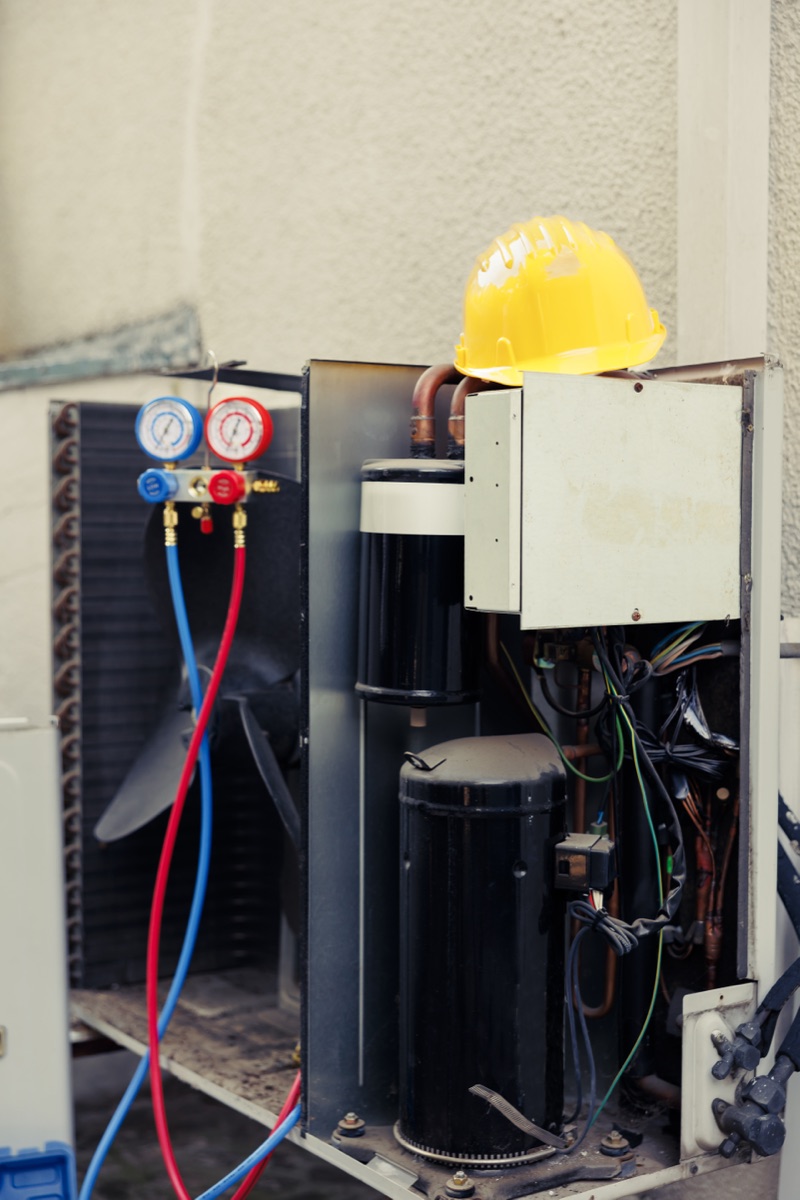
- Static pressure and blower performance with the filter installed.
- Return-air duct leakage or gaps that can bypass the filter.
- Fresh-air intakes, ERVs, HRVs, dampers, and thermostat ventilation settings.
- Outdoor condenser condition, especially after cottonwood and dusty spring weather.
- Options for media filter cabinets, whole-home air cleaners, or portable-room strategies.
For many homes, the right answer is simple: a properly fitted MERV 13 filter, clean coils, sealed returns, and a portable air cleaner in the primary bedroom. For others, especially homes with airflow problems, the right answer may be a media cabinet or duct correction before using a higher-MERV filter.
Get Your HVAC System Smoke-Ready
Salmon HVAC has served northern Utah since 1979. We can help you choose a filter your system can actually support and identify ventilation settings that may pull smoke indoors.
Frequently Asked Questions
Should I run my AC during wildfire smoke in Utah?
Yes, in most homes with central AC or a heat pump. These systems usually recirculate indoor air rather than pulling outdoor air directly into the house. Keep windows and doors closed, use the best filter your system can safely handle, and turn off or close fresh-air ventilation during heavy smoke when possible.
What MERV filter should I use for wildfire smoke?
MERV 13 is the common target recommended in EPA guidance, but the right filter is the highest-efficiency filter your HVAC fan and filter slot can accommodate without airflow problems. A thicker media filter is often better than forcing a restrictive one-inch MERV 13 filter into a system that was not designed for it.
Should the thermostat fan be set to Auto or On?
If your thermostat has a circulation mode, start there. During short smoke events, Fan On can help move more air through the filter, but watch for weak airflow, frozen coils, whistling returns, or rooms that stop cooling. Those are signs the filter or duct system may be too restrictive.
Can an HVAC filter remove the smoke smell?
MERV-rated filters are designed for particles, not most gases and odors. A better HVAC filter can reduce fine smoke particles, but smoke smell may linger. Activated carbon, portable air cleaners, source control, and ventilation after the smoke clears may be needed.
Is a portable air purifier still worth it if I have MERV 13?
Yes. A central filter helps air that moves through the HVAC system, while a portable air cleaner can focus on one room continuously. That is useful for bedrooms and for family members who are sensitive to smoke.
When should I call Salmon HVAC?
Call if you are not sure whether your system has a fresh-air intake, your filter does not seal tightly, airflow drops with a higher-MERV filter, the AC coil freezes, or you want to add a media filter cabinet or whole-home air cleaner. Salmon HVAC serves Davis, Weber, Salt Lake, and Morgan counties from our Centerville base.
Sources and Image Credit
- U.S. EPA: Wildfires and Indoor Air Quality
- AirNow: How to Create a Clean Room at Home
- Utah DEQ: Health Impacts of Wildfire Smoke
- Utah DEQ: Air Quality Conditions During Wildfires
- Feature image: 2021 Utah Wildfire smoke 01.jpg by Farragutful, licensed under CC BY-SA 4.0. Cropped and compressed for web performance.