
Published June 22, 2026 • 10 min read
- Most commercial RTUs last 15–20 years; well-maintained units can reach 20–25. After about 15 years, breakdowns and energy use tend to climb.
- A common industry rule: replace when a repair would cost more than about 50% of a new unit and the equipment has passed roughly 75% of its expected life.
- Installed replacement in Northern Utah typically runs about $8,000–$25,000 per unit ($10,000–$15,000 is common for mid-size units), before crane and curb/electrical add-ons.
- High-efficiency replacements can cut unit energy use 20–40%. Salmon HVAC evaluates each unit individually and recommends repair when repair still makes sense.
For a business, a rooftop HVAC unit is infrastructure. When it underperforms, the costs show up everywhere: higher power bills, uncomfortable customers and staff, emergency service calls at the worst possible time, and in some businesses, spoiled inventory or lost revenue. Yet most rooftop units (RTUs) decline slowly enough that the right time to replace them is easy to miss.
Salmon HVAC has been keeping Northern Utah comfortable since 1979, and we service and replace commercial rooftop units on offices, retail centers, restaurants, dealerships, and industrial buildings across Centerville, Bountiful, Layton, Ogden, and Salt Lake City. This guide lays out the same framework we use on a roof: how long RTUs last, the signs replacement is near, the repair-vs-replace math, and what a change-out actually costs here.
What an RTU Is — and Why Commercial Cooling Is Different
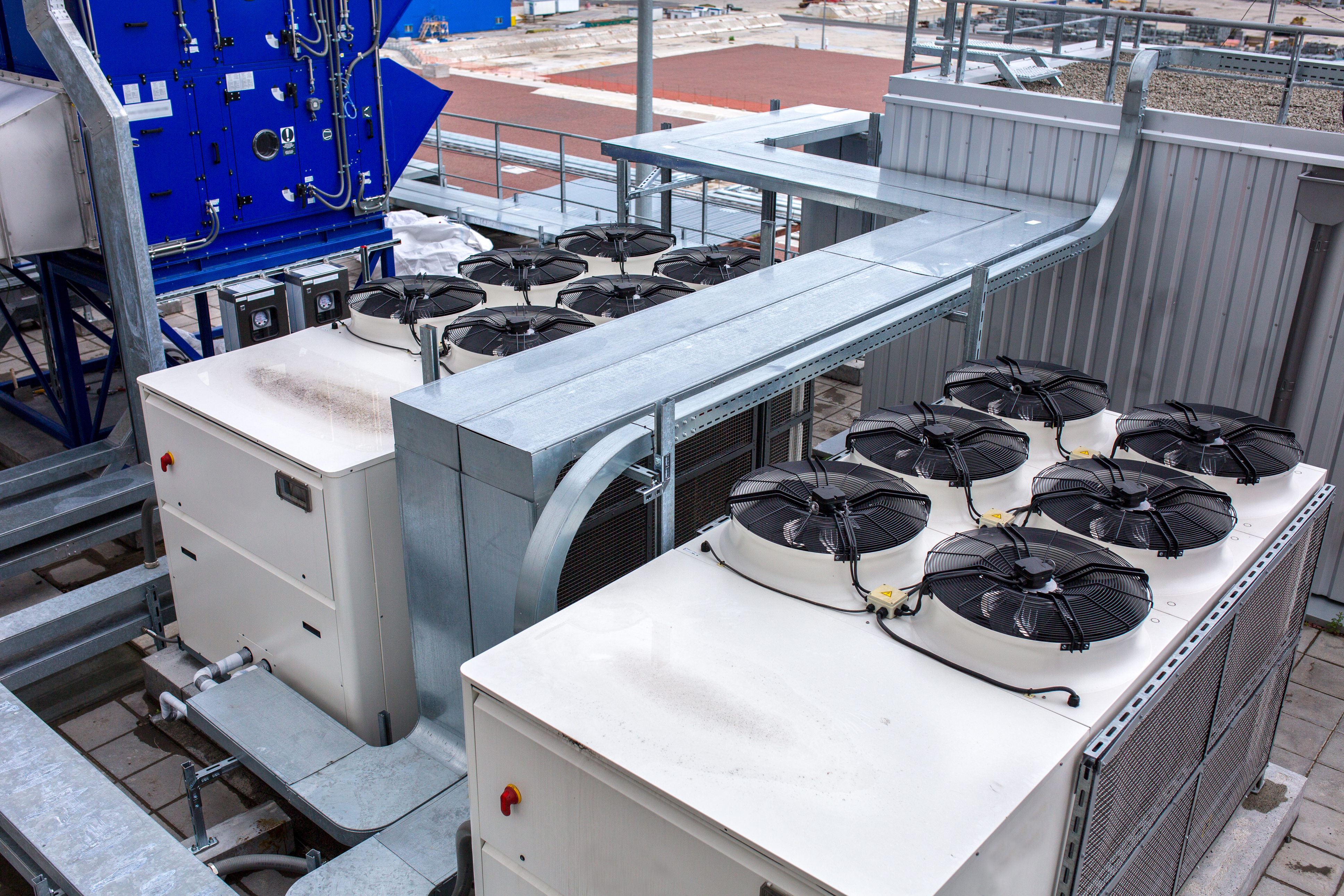
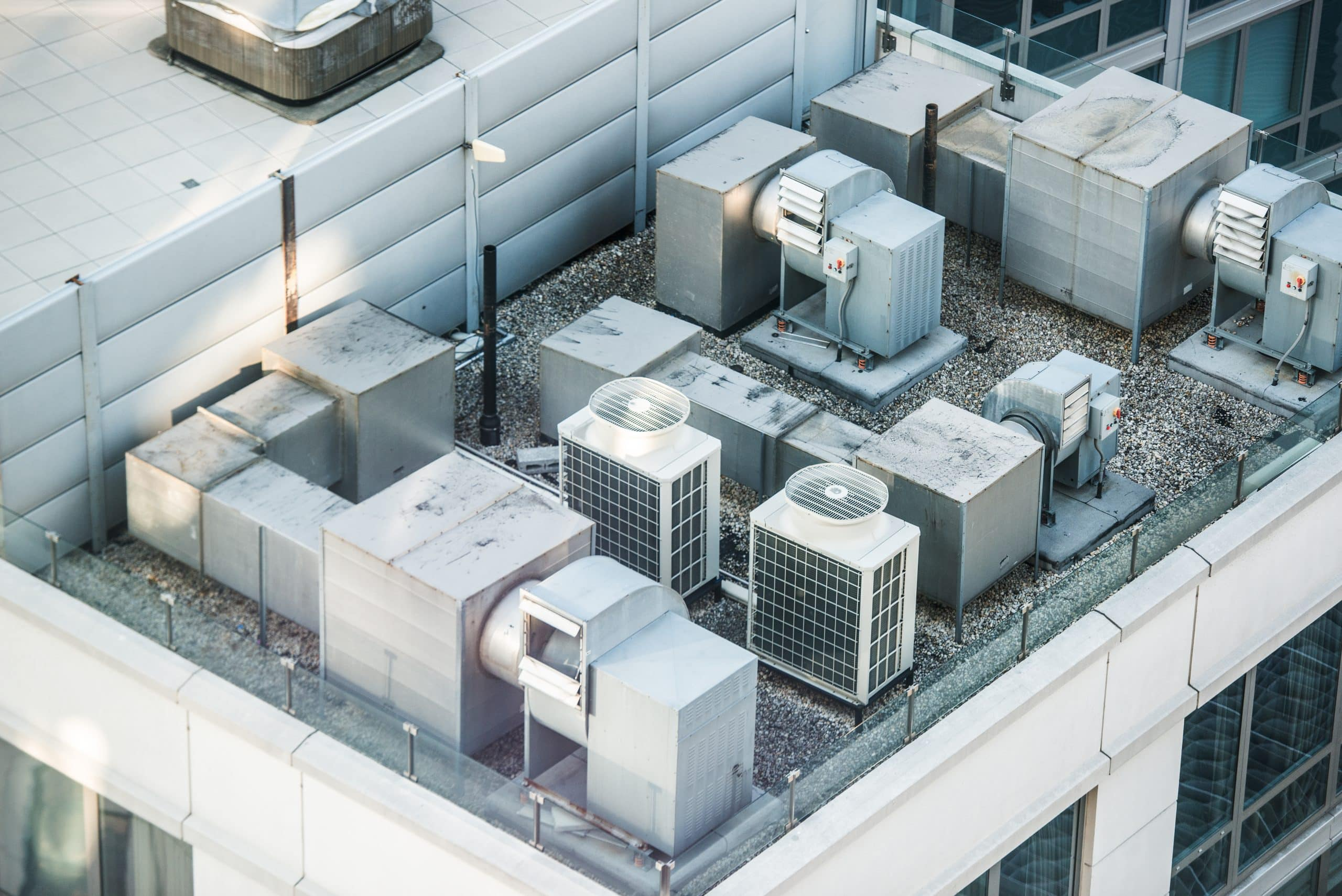
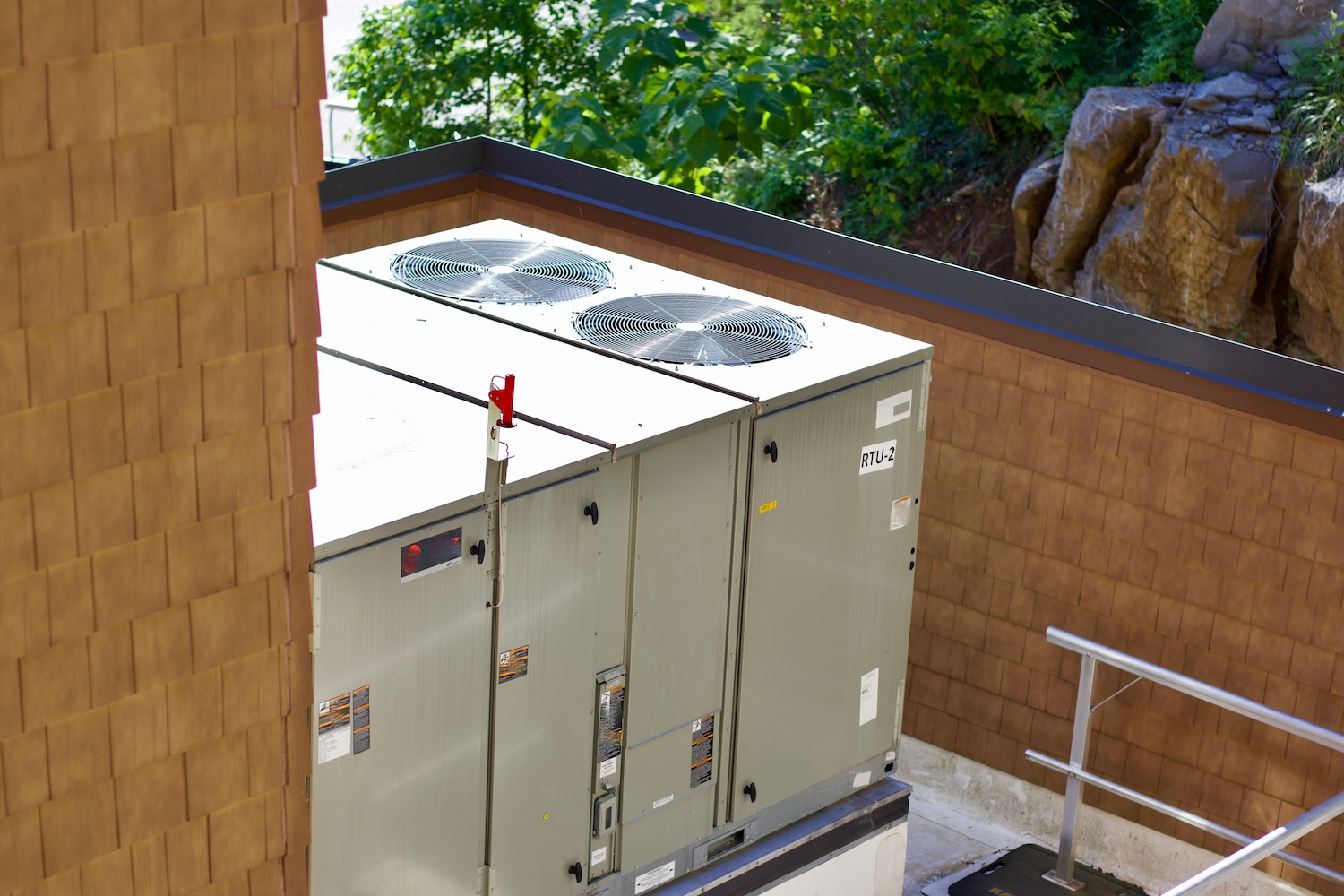
A rooftop unit is a self-contained, packaged HVAC system that sits on the roof and delivers conditioned air down through ductwork into the space below. Most commercial buildings in Northern Utah use one or more RTUs because they save interior floor space, isolate noise, and make service safer to perform away from occupants.
Commercial HVAC is not just bigger residential HVAC. Units run far more hours, serve variable occupancy, often include economizers and outside-air ventilation requirements, and frequently tie into building automation or rooftop controls. That means a commercial repair-vs-replace decision has to weigh uptime, code and ventilation requirements, and energy cost — not just the price of a part. You can see the full scope of what we handle on our commercial HVAC services page, and examples of completed work in our commercial project portfolio.
How Long Do Commercial RTUs Last in Utah?
The industry benchmark is 15 to 20 years for a commercial rooftop unit, and a well-maintained unit can deliver 20 to 25 years of reliable service. The single biggest factor is maintenance: dirty coils, clogged filters, and small ignored issues are the number-one cause of premature failure.
Northern Utah adds its own stresses that can pull a unit toward the lower end of that range:
- High-altitude UV and temperature swings. Intense sun and big day-to-night, summer-to-winter swings are hard on cabinets, gaskets, belts, and electrical components.
- Dust, inversion grit, and debris. Airborne dust and winter inversion particulates load up coils and filters, forcing units to run hotter and longer.
- Hard water and condensate. Mineral-heavy water leaves scale on coils and in condensate pans and drains, accelerating corrosion and clogs.
- Long cooling seasons and high-use schedules. Retail, restaurants, and 24/7 operations rack up runtime that shortens component life.
Consistent preventive maintenance is the most reliable way to reach the top of the lifespan range instead of the bottom.
7 Signs Your Rooftop Unit Is Nearing Replacement
One sign on its own is usually a repair. Two or three together is the moment to start a replacement conversation — before the unit fails on the hottest day of the year.
| Warning sign | What it usually means |
|---|---|
| The unit is 15+ years old | Past the reliability cliff; repair frequency and energy use climb |
| Energy bills creeping up 15–25% | Lost efficiency from worn compressors, dirty coils, failing economizer |
| Repairs are stacking up | Multiple service calls per season signal end-of-life, not bad luck |
| Parts or refrigerant are hard to source | Obsolete or phased-out components mean longer downtime and higher cost |
| Uneven temperatures and comfort complaints | The unit can no longer hold setpoint for the space it serves |
| Short cycling or constant running | Failing controls, low refrigerant, or an oversized/worn system |
| Rust, cabinet corrosion, or a deteriorating curb | Structural wear that repairs cannot reverse |
The Repair-vs-Replace Math: The 50% Rule
The most useful rule of thumb in commercial HVAC comes from long-standing industry practice (often attributed to ASHRAE guidance): replace the unit when a needed repair costs more than about 50% of a comparable new unit, and the equipment has already passed roughly 75% of its expected service life.
A simple way to apply it:
| Scenario | The honest call |
|---|---|
| 8-year-old unit, $1,200 control/motor repair | Repair. Young unit, small repair relative to replacement. |
| 13-year-old unit, $2,500 repair, otherwise sound | Usually repair, but start budgeting for replacement. |
| 17-year-old unit, $6,000+ compressor or coil | Replace. Repair approaches half the cost of new on an end-of-life unit. |
| Any age, repeated failures + rising energy bills | Replace. Total cost of ownership now favors new equipment. |
The reason the rule pairs cost and age is simple: a $4,000 repair on a 6-year-old unit buys you another decade, but the same repair on a 17-year-old unit buys you a year or two before the next major failure. The math has to account for what you are actually purchasing — remaining reliable life.
The Refrigerant Factor (R-22, R-410A, and R-454B)
Refrigerant status can tip a borderline decision toward replacement. There are three groups of units on Northern Utah roofs right now:
- R-22 units (typically pre-2010): R-22 is phased out. Recharging a leaking R-22 system is expensive and only buys short-term life. A refrigerant leak on an R-22 unit usually points to replacement.
- R-410A units (roughly 2010–2025): R-410A is now being phased down under the federal AIM Act. Equipment still runs fine, but new systems have transitioned to lower-GWP refrigerants, and major refrigerant repairs are a factor in the replace decision.
- R-454B / new-refrigerant units: Equipment installed today uses next-generation refrigerants designed to meet current efficiency and environmental standards.
For background on the broader refrigerant transition, see our R-410A to R-454B refrigerant change guide. The short version for building owners: if an older unit needs a compressor or develops a significant refrigerant leak, the cost of obsolete or phased-down refrigerant often makes a new high-efficiency unit the better investment.
Commercial RTU Replacement Cost in Northern Utah
Every roof is different, but these are realistic installed-cost ranges for standard packaged rooftop unit replacement in Northern Utah. Pricing scales with tonnage (cooling capacity), efficiency tier, and how much site work the change-out requires.
| Unit size (cooling) | Typical installed range |
|---|---|
| 5 ton (small retail/office) | $8,000–$14,000 |
| 7.5 ton | $11,000–$18,000 |
| 10 ton | $14,000–$22,000 |
| 12.5–15 ton (large/heavy-use) | $20,000–$35,000+ |
Common add-ons that affect the final number:
| Add-on | Typical cost |
|---|---|
| Crane lift / rigging | $1,500–$3,000 |
| Curb adapter (new unit on existing curb) | $500–$2,000 |
| Economizer, controls, or BAS integration | $500–$3,000+ |
| Gas, electrical, or disconnect updates | Adds ~15–20% to project |
For a residential comparison point and more on how HVAC pricing is built, see our 2026 Utah HVAC replacement cost guide. For larger or multi-zone buildings, a VRF system may be worth comparing against straight RTU replacement — our VRF guide for Utah covers the trade-offs.
The Hidden Cost of Waiting Too Long
Running an end-of-life unit "until it dies" feels like saving money, but it usually costs more than planned replacement:
- Emergency premiums. A failure during a heat wave means emergency dispatch, rush equipment, and crane availability on someone else's timeline — all at a premium.
- Downtime and lost revenue. A closed dining room, an over-heated retail floor, or an unworkable office costs money every hour it is down.
- Energy waste. An aging unit can quietly burn 20–40% more energy than a modern high-efficiency replacement.
- Collateral damage. A failing compressor or refrigerant leak can take out other components, turning a planned change-out into a larger emergency.
Planning ahead also lets you schedule the work for off-hours and capture available efficiency incentives — neither of which is possible when a unit fails unexpectedly.
Why High-Efficiency Replacement Pays Back
Modern rooftop units are dramatically more efficient than equipment from 15–20 years ago. A high-efficiency replacement with a properly commissioned economizer can cut a unit's energy consumption by 20–40%, which changes the total-cost picture over the life of the equipment.
Utah businesses may also be able to offset replacement cost through utility efficiency incentives — programs such as Rocky Mountain Power's Wattsmart Business offerings have historically provided rebates for qualifying high-efficiency commercial HVAC equipment. Incentive programs and amounts change, so we help identify what is currently available and applicable to your project before you commit.
Planned Replacement Beats Reactive Replacement
The best commercial HVAC decisions are made on a calendar, not in a crisis. If you have one or more units in the 13–18-year range, the smart approach is:
- Assess and document each unit. Age, refrigerant, efficiency, repair history, and condition — so you know which units to watch.
- Budget by priority. Replace the worst units first and phase the rest across capital cycles.
- Schedule around operations. Off-hours and seasonal shoulder months (spring and fall) keep disruption and cost down.
- Stay on maintenance. A maintenance agreement protects the units you keep and gives you early warning on the ones you don't.
For seasonal planning specific to Utah businesses, our winter HVAC planning guide for businesses is a useful companion to this one.
Get a Straight Repair-vs-Replace Answer for Your Building
Salmon HVAC will assess your rooftop units, give you the numbers, and recommend replacement only when it is genuinely the better investment — then schedule the work around your operations.
How Salmon HVAC Approaches Commercial RTU Decisions
- We inspect the actual unit. Compressor, coils, economizer, controls, refrigerant type and charge, electrical, and curb condition — not just the symptom you called about.
- We run the repair-vs-replace math with you. Repair cost, remaining life, refrigerant status, and energy impact, so the decision is based on numbers.
- We repair when repair makes sense. A serviceable unit with a fixable problem gets fixed. We do not push replacement you don't need.
- We plan replacement around your business. Off-hours change-outs, coordinated crane and curb work, and phased multi-unit projects to minimize downtime.
- We back it with 47 years in Northern Utah. Family-owned since 1979, with commercial experience across offices, retail, restaurants, dealerships, and industrial facilities.
Frequently Asked Questions
How long does a commercial rooftop HVAC unit last?
Most commercial RTUs last 15 to 20 years. With consistent preventive maintenance, many reach 20 to 25 years. After about 15 years, repair frequency and energy costs typically start climbing, which is when replacement planning should begin.
When should a business replace a commercial RTU instead of repairing it?
A widely used guideline is to replace when a repair would cost more than about 50% of a new unit and the equipment has passed roughly 75% of its expected life. Stacking repairs, rising energy bills, hard-to-source parts or refrigerant, and the unit failing to hold temperature all point toward replacement.
How much does commercial RTU replacement cost in Utah?
Installed replacement commonly runs about $8,000 to $25,000 per unit in Northern Utah, with mid-size 5 to 10 ton units often in the $10,000 to $15,000 range. Crane lifts typically add $1,500 to $3,000, and curb adapters, controls, gas, and electrical work can add another 15 to 20 percent.
Do older R-22 or R-410A rooftop units need to be replaced?
Not automatically, but refrigerant status affects the decision. R-22 is phased out and recharging a leak is expensive and short-term. R-410A is being phased down under the AIM Act. If an older R-22 or R-410A unit develops a refrigerant leak or compressor failure, replacement is often the more economical long-term choice.
Can you replace a rooftop unit without shutting down my business?
In most cases, yes. We schedule change-outs around your hours, including evenings and weekends, and coordinate crane and curb work in advance. For multi-unit buildings, replacements can be phased so the space stays conditioned throughout the project.