
Published August 27, 2026 • 10 min read
- Confirm it's a total loss (not one zone), check the obvious — thermostat/BAS setpoint, power, and gas — and note the indoor temperature and how fast it's dropping.
- Protect the building. Keep occupied spaces above 55°F and any wet-pipe sprinkler areas at 40°F minimum. Open cabinet and mechanical-room access to circulate warmth around pipes; watch vulnerable plumbing.
- Call for 24/7 commercial service when heat is fully out during freezing weather — freeze risk alone makes most total losses an emergency in Northern Utah.
- Most commercial no-heat failures are repairable: ignition/flame-sensor faults, a locked-out control board, gas-supply issues, a stuck-open economizer, or a heat-pump defrost problem. Salmon HVAC responds 24/7 at (801) 397-0030.
A commercial heating failure is rarely just a comfort problem. In a Northern Utah winter, an unheated building is a building at risk: water supply lines, condensate traps, coil and boiler piping, and wet-pipe fire sprinkler systems all begin working against you the moment the heat goes off and the temperature starts falling. Add customers who can't shop, staff who can't work, and inventory or processes that can't sit cold, and a single failed rooftop unit becomes a revenue-and-liability event measured in hours.
Salmon HVAC has kept Northern Utah comfortable since 1979, and we run 24/7 emergency HVAC service for commercial clients across Centerville, Bountiful, Layton, Ogden, and Salt Lake City. This is the same cold-snap plan we give the facility managers we work with: what to do first, how to keep the building safe while a truck is on the way, and what's usually behind a commercial no-heat call.
What Counts as a Commercial No-Heat Emergency?
Not every heating complaint is a 2 a.m. call. One office that's a few degrees cool while the rest of the building is fine is a service ticket, not an emergency. The situation crosses into emergency territory when heat is fully out and something time-sensitive is on the line:
- Freeze risk. Outdoor temperatures are at or heading below freezing and the building can no longer hold its own heat — the single most common reason a Northern Utah no-heat call can't wait until morning.
- Fire-protection risk. The building has a wet-pipe sprinkler system in a space that's dropping toward 40°F (more on that below).
- Occupancy and safety. Staff or customers can't safely or legally occupy the space, or you have a duty to maintain a minimum temperature.
- Product or process risk. Temperature-sensitive inventory, materials, lab or medical equipment, or production processes that can't tolerate a cold building.
If any of those apply, treat it as an emergency and get service moving. When in doubt during freezing weather, call — a two-minute phone triage is cheaper than a burst pipe.
The First 15 Minutes: A No-Heat Triage Checklist
Before you call, run this quick triage. It tells the dispatcher what they need to prioritize your call correctly, and occasionally it turns up something you can fix on the spot — a tripped breaker or a thermostat someone switched off.
| Step | What to check |
|---|---|
| 1. Confirm the scope | Is it the whole building or one zone/unit? Multiple rooftop units down at once often points to gas supply, a power issue, or a building-automation (BAS) fault rather than one failed unit. |
| 2. Check the thermostat / BAS | Confirm the system is in Heat mode, the setpoint is correct, and no schedule or holiday override has it set back. A dead thermostat battery or a BAS glitch mimics equipment failure. |
| 3. Check power | Look for tripped breakers or blown fuses at the panel and any rooftop/unit disconnects. Reset a breaker once; if it trips again, stop and note it. |
| 4. Check gas | Confirm the gas is on and other gas appliances work. If you smell gas, leave and call the utility — do not troubleshoot. |
| 5. Read the equipment | Many commercial units show a status/fault LED or code. Note it. A unit in "lockout" after failed ignition attempts is a common, diagnosable condition. |
| 6. Record the temperature | Note the current indoor temperature and how fast it's falling. That number drives every downstream decision — keep-open vs. close, and how urgent the freeze risk is. |
One important limit: reset a breaker or a unit lockout once. Repeatedly resetting a safety lockout on a gas unit forces more ignition attempts and can be genuinely unsafe. If it won't stay running after one reset, it's a technician's job. For a homeowner-focused version of this triage, our no-heat furnace troubleshooting guide and first-30-minutes heating emergency action plan cover the residential side.
Why Commercial No-Heat Is Higher-Stakes Than a Home
The reason a commercial no-heat call gets a faster response than a home is the building itself. A house has one or two people who feel cold quickly and act. A 30,000-square-foot building can lose heat quietly overnight, and by the time anyone notices, water in the walls and mechanical spaces is already at risk. The temperatures that matter:
| Threshold | Why it matters |
|---|---|
| 55°F — general building minimum | Best-practice guidance is to keep all building areas above 55°F, including unoccupied zones, basements, and mechanical rooms, to keep plumbing and equipment out of the danger zone. |
| 40°F — wet-pipe sprinkler minimum | NFPA 25 requires water-filled fire-sprinkler piping be maintained at a minimum of 40°F. Let a sprinklered space fall below that and you risk a frozen — then burst — fire-protection line. |
| 32°F — water freezes | Pipes can begin freezing once the air around them reaches 32°F. Interior pipes in exterior walls, attics, and unheated mechanical spaces go first. |
| 20°F — risk spikes | Freeze risk rises sharply when outdoor temperatures sit at 20°F or below for several consecutive hours — a routine Northern Utah winter night in the Davis and Weber valleys. |
This is why we tell facility managers not to "wait and see" overnight during a cold snap. A building cools fastest in exactly the hours no one is watching it, and a burst supply line or frozen sprinkler main turns a repairable heating fault into a flood, a fire-code violation, and days of restoration.
Common Causes of Commercial No-Heat in Northern Utah
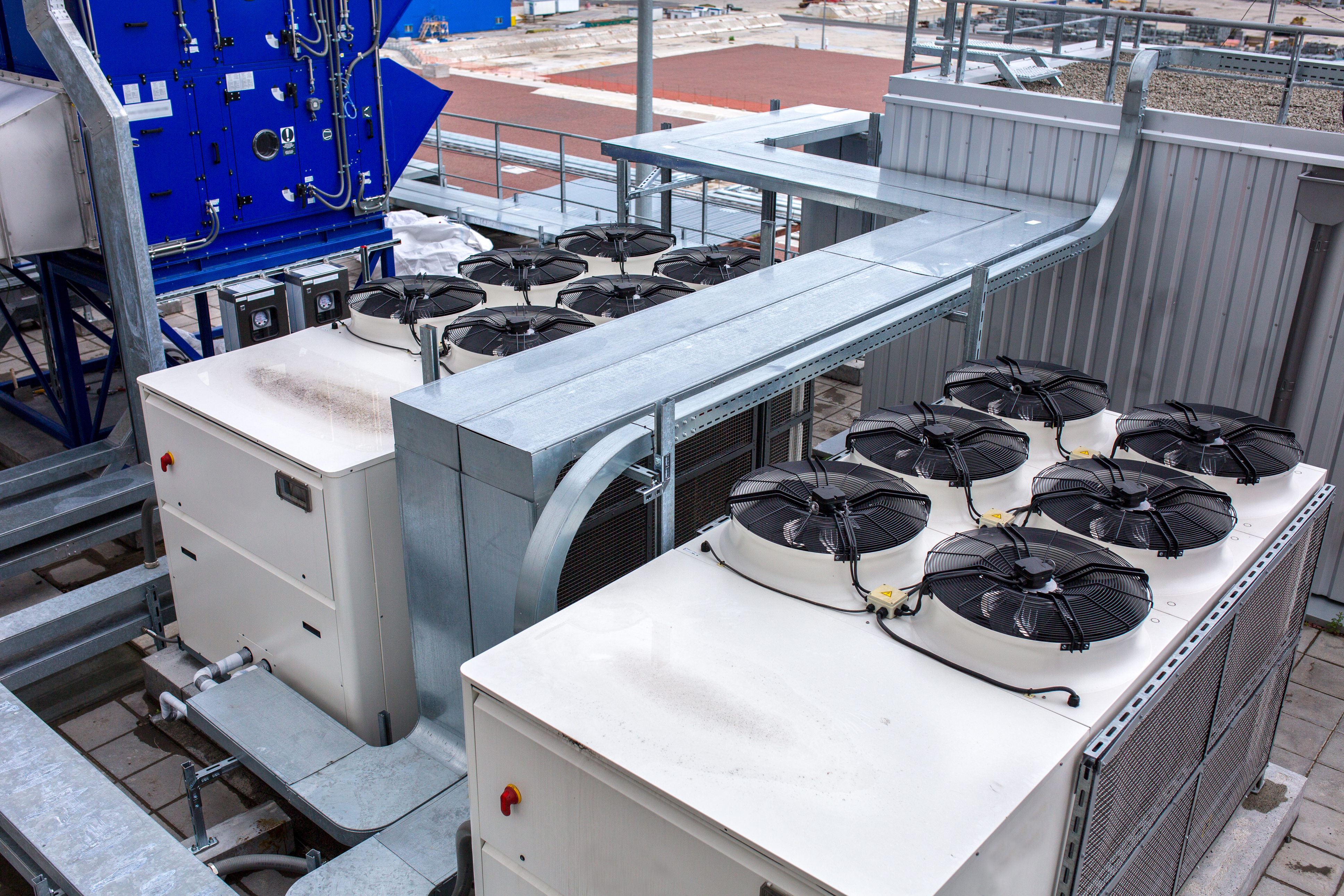
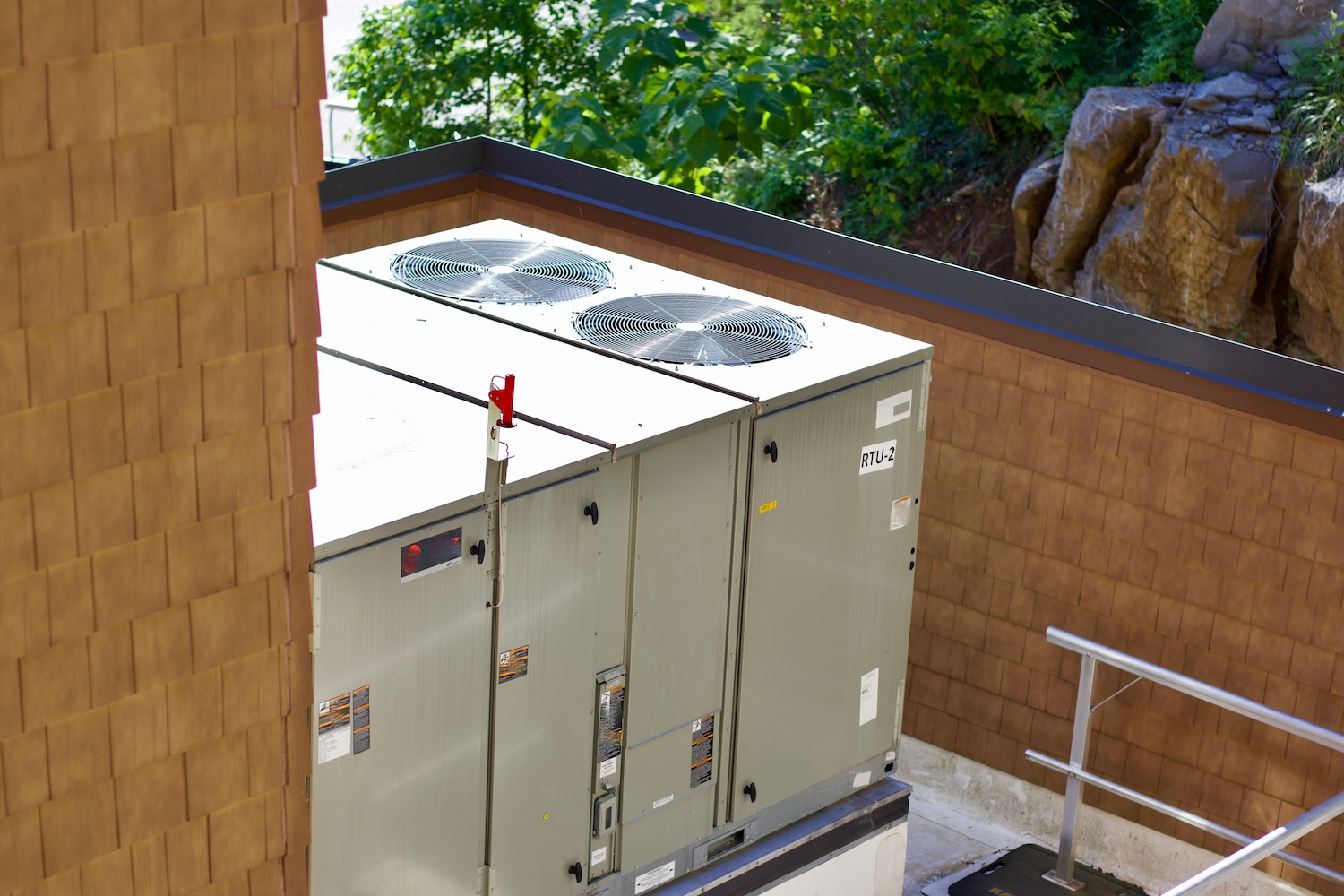
Commercial heating comes in several flavors — gas-fired rooftop units (RTUs), heat pumps and VRF systems, and hydronic boiler systems — and each fails differently. Here's what we most often find on a no-heat call.
Gas-fired rooftop units (RTUs)
The workhorse of Northern Utah commercial buildings. When an RTU blows air but no heat, the usual suspects are:
- Ignition failure — a worn hot-surface igniter or a dirty flame sensor that can't prove flame, sending the unit into lockout.
- Gas-supply or gas-valve issues — low pressure, a closed valve, or a failed gas valve. Multiple units out at once often means a supply-side problem.
- Safety-switch trips — a high-limit or rollout switch shutting the burners down, frequently because of restricted airflow (dirty filters, a failing blower).
- Stuck-open economizer — the fresh-air damper jammed open, dumping frigid outside air into the space. The unit may "work" and still never warm the building.
- Control-board or thermostat/BAS faults — a locked-out board or a communication fault that stops a call for heat.
Heat pumps and VRF systems
Electric heat pumps and VRF systems lose heat in their own ways: a defrost-cycle malfunction that lets the outdoor coil ice over, a failed reversing valve stuck in cooling, low refrigerant charge, or auxiliary/backup heat that isn't engaging when it's supposed to. In a hard freeze, a heat pump that can't defrost properly will steadily lose capacity. Our VRF maintenance and repair guide covers how these systems are serviced.
Hydronic / boiler systems
Boiler-heated buildings can fail on a lockout (ignition, low water, or flame fault), a failed circulator pump that stops moving hot water, an airlocked loop, or — the worst case — a freeze in the system itself. Buildings that use a glycol (antifreeze) loop for freeze protection can lose that protection if the mixture has been diluted over years of top-offs, which is exactly the kind of thing a fall inspection catches.
Across all three, the theme is the same: most no-heat failures are single, diagnosable, repairable faults — not a dead system. The danger isn't the repair; it's the cold building around it while the repair waits.
Protect the Building While You Wait for Service
Once you've called, the job for the next hour or two is damage control — slowing the building's heat loss and keeping water out of the freeze zone. You don't need to be an HVAC tech to do most of this.
| Action | Why |
|---|---|
| Add safe backup heat | Use commercial-grade portable/space heaters in the most freeze-vulnerable areas (mechanical rooms, exterior-wall plumbing, sprinkler riser rooms). Keep them clear of combustibles and don't overload circuits. |
| Open up around pipes | Open cabinet doors, access panels, and mechanical-room doors so building heat circulates around vulnerable piping. |
| Trickle water at fixtures | A slow drip at the most exposed fixtures keeps water moving and reduces freeze risk in supply lines. |
| Close the envelope | Shut overhead and dock doors, close vestibules, and stop propping exterior doors. Every open door accelerates heat loss. |
| Watch the sprinkler system | Keep an eye on any wet-pipe sprinkler areas. If a sprinklered space is dropping toward 40°F, tell your dispatcher and your fire-protection contractor immediately. |
| Know your water shutoff | Locate the main water shutoff now, before you need it. If a pipe does burst, shutting off water fast is the difference between a mop and a claim. |
If the building keeps cooling and can't be held safely, plan to close, relocate staff, or reduce occupancy. Protecting people and the structure comes before staying open.
When to Stay Open, and When to Close
There's no single temperature that dictates the call, but a simple framework helps:
- Holding above ~60°F and stable: often workable short-term, especially if a technician gives you a near-term restore time. Keep protecting freeze-prone areas.
- Falling through the 50s: most customer-facing and office operations should prepare to close or relocate. It's uncomfortable, it looks bad, and it raises liability.
- At or below the low 50s and still dropping: prioritize freeze protection and safety over operations. Get people out of the cold and let the crew work.
A good emergency technician will give you a realistic estimate — "quick parts fix, back within the hour" versus "we need a part in the morning" — so you can make an informed operational decision instead of guessing.
Preventing the Next Cold-Snap Failure
Almost every commercial no-heat emergency we respond to was preventable. The failures that strand a building on the coldest night of the year — a marginal igniter, a weak flame sensor, a sticking economizer damper, a diluted glycol loop, a heat pump that can't defrost — are exactly what a pre-season inspection is designed to catch. The most effective steps:
- Book fall commercial maintenance before the first hard freeze. Our commercial HVAC fall maintenance guide for Northern Utah lays out the full RTU-and-VRF checklist.
- Put aging units on a replacement plan. If a rooftop unit is past 15 years and stacking up repairs, decide before winter, not during a failure — see our RTU repair-vs-replacement guide.
- Plan the season, not just the day. Our winter HVAC planning guide for businesses covers freeze-protection prep, staffing an after-hours contact, and knowing your systems before you need to.
- Get on a commercial maintenance agreement. Beyond catching problems early, agreement clients get priority emergency response — which matters most on the nights everyone else is calling too.
You can see the full scope of what we cover on our commercial HVAC services page.
Commercial Heat Out? We Answer 24/7.
Salmon HVAC provides 24/7 emergency commercial HVAC service across Davis, Weber, Salt Lake, and Morgan counties — and we prioritize no-heat calls during cold snaps. Call now, or set up a commercial maintenance plan so you're first in line next winter.
How Salmon HVAC Handles Commercial No-Heat Calls
- We triage on the phone. We help you check scope, power, gas, and controls, and we tell you how to protect the building while a technician is en route.
- We prioritize freeze risk. No-heat calls in freezing weather move to the front of the queue, and maintenance-agreement clients get priority dispatch.
- We diagnose the whole unit. Ignition, gas, safeties, economizer, controls, refrigerant, and airflow — not just the symptom — so the fix holds.
- We restore heat first, then advise. The night's job is safe, working heat. Repair-vs-replace planning comes after the building is out of danger.
- We back it with 47 years in Northern Utah. Family-owned since 1979, with commercial experience across offices, retail, restaurants, dealerships, and industrial facilities.
Prefer to plan ahead instead of react? Contact us or request a quote for a commercial maintenance agreement before the season turns.
Frequently Asked Questions
What counts as a commercial no-heat emergency?
It's an emergency when a building has lost heat and something time-sensitive is at risk: pipes or a wet-pipe fire sprinkler system approaching freezing, staff or customers who can't safely occupy the space, a facility that must maintain a minimum temperature, or temperature-sensitive inventory or processes. In a Northern Utah cold snap, freeze risk alone makes most total heat losses an emergency, because water in an unheated building can begin freezing within hours.
What temperature should I keep a commercial building at to prevent freezing?
Keep general building areas above 55°F, even in unoccupied zones, basements, and mechanical rooms. Areas with wet-pipe fire sprinkler systems must be maintained at a minimum of 40°F under NFPA 25. Pipes can start to freeze once air around them drops to 32°F, and the risk climbs sharply when outdoor temperatures sit at 20°F or below for several consecutive hours — common on Northern Utah winter nights.
Why did my rooftop unit stop producing heat but the fan still runs?
On a gas-fired RTU, the blower can run while the burners fail to fire. Common causes are a failed igniter or flame sensor, a tripped high-limit or rollout switch, a gas-supply or gas-valve problem, a locked-out control board, or a stuck-open economizer pulling in cold outside air. A safety lockout after several failed ignition attempts is common. These are diagnosable and usually repairable, but on a commercial unit they should be checked by a technician rather than repeatedly reset.
Should I keep my business open during a no-heat event in winter?
It depends on how cold the space gets and how fast. Once indoor temperatures fall toward the 50s and keep dropping, most retail, office, restaurant, and customer-facing operations should plan to close or relocate staff — both for safety and comfort and to avoid liability. Use the time to protect the building from freezing and get emergency service moving. A technician can give you a realistic restore time so you can make the call.
How fast can Salmon HVAC respond to a commercial no-heat call in Northern Utah?
We offer 24/7 emergency service for commercial clients across Davis, Weber, Salt Lake, and Morgan counties, and we prioritize no-heat calls during cold snaps because of the freeze risk. Buildings on a commercial maintenance agreement get priority response. Call (801) 397-0030 as soon as you confirm a total heat loss, and we'll walk you through protecting the building while a technician is dispatched.