
Published March 25, 2026 • Updated March 26, 2026 • 7 min read
The Short Answer: Yes — But Choose the Right Type
If someone told you heat pumps do not work in cold climates, they were probably thinking about equipment manufactured before 2015. That reputation was earned honestly: older heat pump technology did lose most of its heating capacity when outdoor temperatures dropped below 35°F, making it a poor fit for northern Utah winters. That is no longer what is being installed.
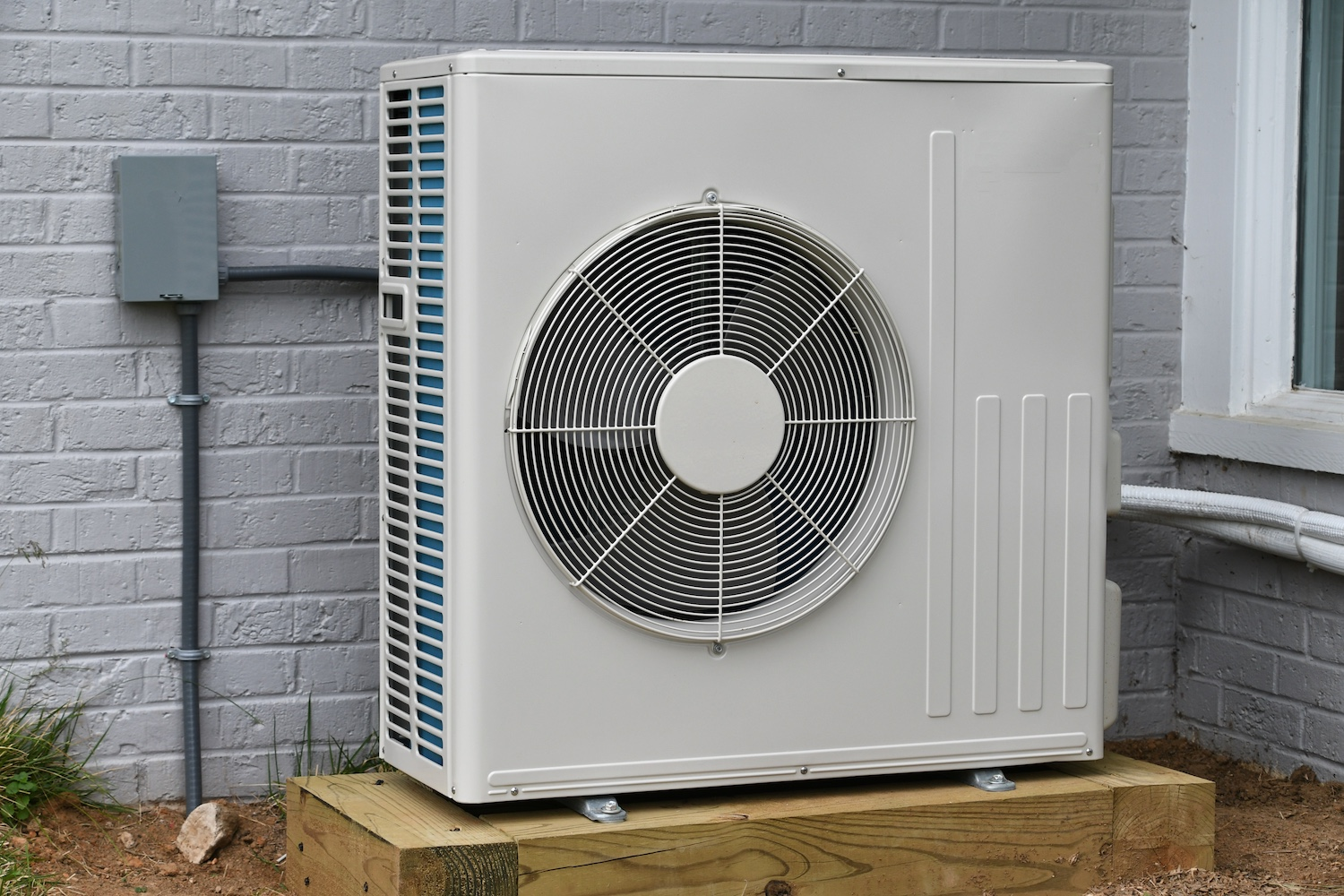
Modern cold-climate heat pumps — specifically models rated at HSPF2 (Heating Seasonal Performance Factor, second edition) of 7.5 or higher — maintain 100% of their rated heating capacity at 5°F outdoor temperature and continue operating all the way down to -13°F. The Daikin Aurora and Daikin Fit, both of which Salmon HVAC installs regularly in Davis and Weber County homes, carry that -13°F rating.
The honest qualifier is this: your specific location within Utah matters. The Salt Lake Valley floor and Davis County benchlands see different temperature profiles than Morgan County or the Ogden bench at elevation. Below, we work through each zone and what makes sense for each one.
How a Heat Pump Actually Works
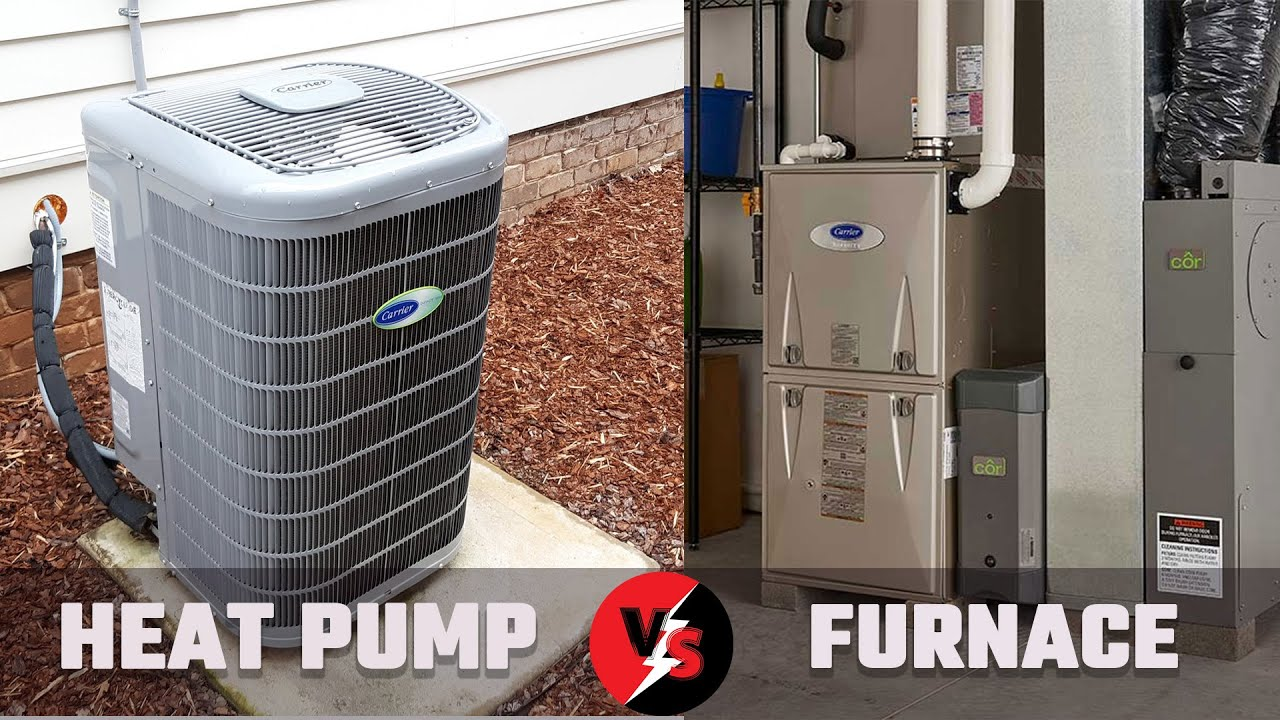
A furnace generates heat by burning fuel. A heat pump does not generate heat — it moves it. This distinction is what makes heat pumps more efficient than combustion heating under most conditions, and it is also where the cold-weather limitation comes from.
A heat pump uses a refrigerant cycle — the same physics as your refrigerator or central air conditioner — to extract heat energy from outdoor air and transfer it inside. Even at 20°F, outdoor air contains substantial heat energy. The refrigerant absorbs that energy as it evaporates at low pressure, then the compressor raises the pressure (and temperature), and the heated refrigerant releases that energy inside your home through the air handler coil.
The efficiency of this process is measured as COP (coefficient of performance): a COP of 3.0 means the system delivers 3 units of heat energy for every 1 unit of electrical energy consumed. At 40°F outdoor temperature, a modern heat pump operates at COP 3.0–4.0. At 20°F, COP drops to roughly 2.0–2.5. At 0°F, COP falls to around 1.5. Even at COP 1.5, a heat pump uses less energy than a resistance electric heater, which operates at COP 1.0 by definition.
Old-technology heat pumps used fixed-speed compressors. When outdoor temps fell, capacity dropped sharply and the system could not keep up — electric resistance backup strips ran constantly, destroying efficiency. Modern variable-speed inverter compressors solve this by modulating speed and refrigerant flow to extract heat effectively at much lower temperatures.
Utah's Climate Zones and What They Mean for Heat Pump Selection
Utah has significant microclimatic variation even within a small geographic area. A Centerville home at 4,300 ft elevation sees different conditions than a Salt Lake City home at 4,200 ft or a Morgan County home at 5,000 ft. Here is how we think about heat pump selection across the areas we serve:
Salt Lake Valley Floor (Murray, Sandy, West Jordan, Draper)
Winter low temperatures in the Salt Lake Valley bottom out at roughly 5°F to 10°F during the coldest stretches, with rare exceptions. NOAA's 99th-percentile design temperature for Salt Lake City International Airport is 4°F. A standard cold-climate heat pump rated to -13°F handles this comfortably with capacity to spare. A dual-fuel configuration is not required here, though it remains a valid choice for homeowners who want maximum redundancy.
Davis County Benchlands (Centerville, Bountiful, Farmington, Kaysville)
This is Salmon HVAC's home territory. The Wasatch Front benchlands at 4,400–4,800 ft elevation see occasional dips to 0°F to -5°F during extreme cold events, with perhaps 3–5 such nights per year in a typical winter. A cold-climate rated heat pump (HSPF2 ≥ 7.5, rated to -13°F) handles these conditions while maintaining adequate heating capacity. We install a lot of Daikin Aurora and Daikin Fit systems in this zone. Single-system heat pumps are appropriate here; dual-fuel is an option for homes with existing gas furnaces that the homeowner wants to retain as a backup.
Weber County (Ogden, Roy, Clearfield, Layton)
Weber County sits slightly north and at generally similar elevations to Davis County, but sees a few more severe cold events per winter. Temperatures of -5°F to -10°F occur during notable cold snaps. For homes in this zone, we strongly recommend cold-climate rated equipment and often suggest dual-fuel configurations for homes that already have gas service. A heat pump alone will still cover the vast majority of heating hours — but the gas furnace backup provides peace of mind and cost efficiency during the coldest 1–2% of operating hours.
Morgan County (Morgan, Porterville, Lost Creek area)
Morgan County is a different situation. At 5,000–5,500 ft elevation in the Weber River valley, temperatures regularly reach -10°F to -15°F in January and February, and -20°F is not unheard of during extreme events. For Morgan County installations, we recommend dual-fuel systems as the primary configuration: a cold-climate heat pump handles heating from 65°F down to roughly -5°F, and the gas furnace takes over when outdoor temperatures fall below that threshold. This captures maximum heat pump efficiency for 90%+ of heating hours while ensuring reliable performance during the valley's hard freezes.
Dual-Fuel Systems: The Practical Middle Ground
A dual-fuel system is not a compromise — it is a deliberate engineering choice that optimizes for Utah's actual climate. Here is how it works in practice:
The outdoor heat pump and the indoor gas furnace coexist in the same system, controlled by a single smart thermostat. You set a "balance point" temperature — typically somewhere between -5°F and -10°F — at which the system automatically switches from heat pump operation to gas furnace operation. Above the balance point, the heat pump runs. Below it, the gas furnace runs.
Why does this make sense economically? Because the heat pump is dramatically more efficient than gas combustion at moderate temperatures, and gas is more cost-effective than electricity at extreme cold when the heat pump's COP approaches 1.0. The dual-fuel system runs each source when it has the economic advantage.
Dominion Energy, which provides gas service across most of northern Utah, officially recommends dual-fuel heat pump systems as the most cost-effective heating approach for Utah's climate. Their ThermWise program offers a $300–$500 rebate specifically for qualifying dual-fuel installations — see our Utah heat pump rebates guide for how to stack this with Rocky Mountain Power Wattsmart rebates and the federal IRA tax credit.
Real Energy Cost Comparison: Utah Utility Rates
Abstract efficiency ratings mean little without actual dollar figures. Here is how the math works with current Utah utility rates:
Utah Utility Rates (2026)
- Rocky Mountain Power residential rate: approximately $0.10/kWh
- Dominion Energy residential gas rate: approximately $1.10/therm
- One therm of natural gas = approximately 100,000 BTU of fuel energy
- 80% AFUE gas furnace delivers 80,000 BTU of heat per therm = effective cost of $1.375 per 100,000 BTU of heat delivered
- One kWh of electricity = 3,412 BTU of input energy
- Heat pump at COP 3.0 = 10,236 BTU of heat per kWh = $0.10 per 10,236 BTU, or $0.977 per 100,000 BTU
- Heat pump at COP 2.0 (cold day, 15°F–20°F): $1.465 per 100,000 BTU — roughly tied with gas
- Heat pump at COP 1.5 (very cold, 0°F–5°F): $1.95 per 100,000 BTU — gas has a clear advantage
The crossover point — where gas becomes more cost-effective than the heat pump — lands somewhere between 0°F and 15°F depending on your specific equipment's efficiency curve. This is exactly why dual-fuel systems are set to switch over at -5°F to -10°F: the heat pump retains an economic advantage above that range, and gas takes over when it becomes the cheaper option.
For a typical Davis County home spending $1,200 per year on heating, shifting to a dual-fuel heat pump system commonly reduces annual heating costs to $700–$900 — a savings of $300–$500 per year after the initial investment. At that rate, the incremental cost of cold-climate equipment pays back in 5–8 years, before accounting for rebates and tax credits that substantially compress the payback period.
Common Myths About Heat Pumps in Cold Weather
Myth: "Heat pumps blow cold air."
Heat pump supply air typically comes out at 90°F–100°F, compared to 120°F–130°F from a gas furnace. It feels cooler to the touch if you hold your hand directly over a vent, but it heats the room to the same set temperature. Modern variable-speed air handlers mitigate this further by running longer cycles at lower temperatures, which distributes heat more evenly and avoids the "cold blast" sensation entirely.
Myth: "The outdoor unit will freeze up and stop working."
Heat pump outdoor units do accumulate frost at low temperatures — this is normal and expected. The system includes a built-in defrost cycle that periodically reverses the refrigerant flow to melt accumulated frost. During defrost cycles, the system switches temporarily to backup heat; the entire defrost process takes 3–5 minutes and occurs automatically. A properly sized and installed heat pump does not ice up and fail — a unit that does is undersized, improperly charged, or has an airflow problem.
Myth: "You still need a gas furnace as a backup, so why bother with a heat pump?"
A dual-fuel system's gas furnace activates perhaps 10–15 times per year in a Davis County winter, and never in Salt Lake Valley. For roughly 95% of heating hours, the heat pump handles everything — at 2–3 times the efficiency of the gas furnace it is theoretically "backing up." The furnace in a dual-fuel system functions as insurance, not as a primary heating source.
Myth: "Heat pumps require more maintenance."
A heat pump requires the same annual service as an air conditioning system — filter changes, coil cleaning, refrigerant check. Because a heat pump does both heating and cooling duty, some components (especially the compressor and reversing valve) accumulate more operating hours than a dedicated cooling-only system. Annual preventive maintenance from a qualified technician keeps heat pump systems running reliably for 15–20 years.
How Salmon HVAC Approaches Utah Heat Pump Installations
We have been installing heating and cooling systems in northern Utah since 1979. When a customer asks whether a heat pump makes sense for their home and location, we do not give a blanket yes or no. We look at their specific address, elevation, existing equipment, utility accounts, and heating load before recommending a system type.
For most homes in Salt Lake County, Davis County, and the Weber County valley floor, a cold-climate heat pump — either standalone or dual-fuel — is a sound choice that will deliver lower operating costs, better comfort, and access to meaningful rebates. For Morgan County and higher-elevation locations in Weber County, we recommend dual-fuel as the standard approach.
As a Daikin Comfort Pro Authorized Dealer, we install the Daikin Aurora and Daikin Fit systems — both rated to -13°F — along with Daikin's variable-speed air handlers and communicating thermostats that optimize performance in Utah's variable climate. We also handle the Rocky Mountain Power Wattsmart and Dominion Energy ThermWise rebate applications for every qualifying installation.
If you are evaluating a heat pump for your northern Utah home, contact us for a free in-home assessment. We will size the system properly for your specific load, confirm which rebate programs apply, and give you an honest recommendation on whether a single-system or dual-fuel approach makes more sense for your location and existing equipment.
Get Expert Advice on Heat Pumps for Your Utah Home
Salmon HVAC has been serving northern Utah since 1979. We install cold-climate Daikin heat pumps rated for Utah's winters and handle all rebate paperwork for our customers.